
Grand Tactician: The Civil War is widely recognized by most of the wargaming community as a landmark title that finally bridged the gap between the strategic and tactical elements of war we’ve seen for ages, but on different scales and spread across varied titles. No American Civil War game had ever unified those aspects together, and since Creative Assembly didn’t want to touch the subject with its Total War franchise, the team at the Grand Engineer Corps took up the mantle and delivered a great, if flawed title that took a while to get to the amazing state it’s in today.
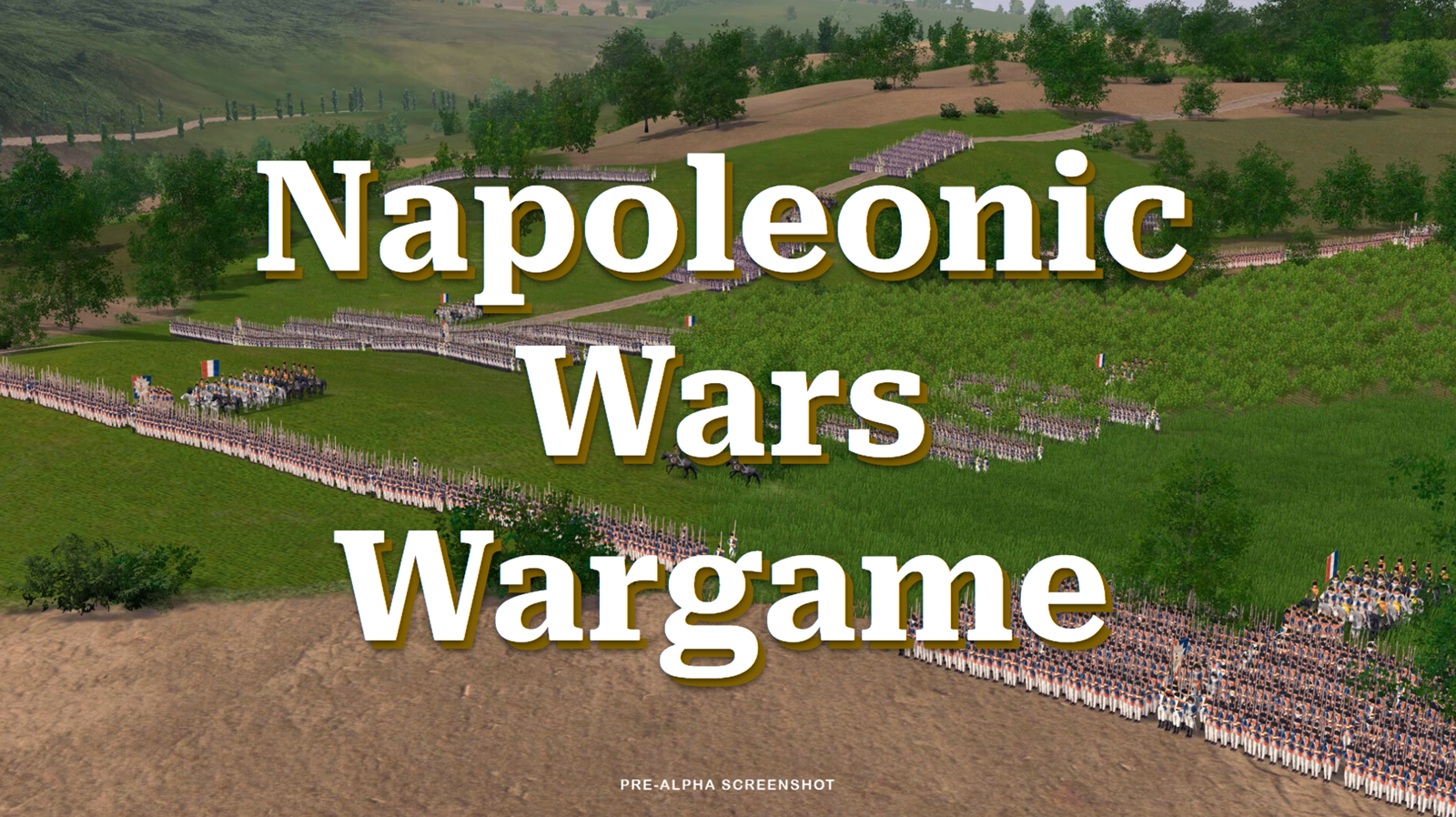
After all those years of hard work and community pressure, they have decided to take the formula and lessons they’ve learned and give a new game a shot. That game is to be Grand Tactician: Napoleonic Wars (1792-1815). The basics are there: Bridging the game between the Grand Strategy and Real-Time Tactics genres that have long suffered from a structural compromise: games either deliver high-level geopolitical management while abstracting battles into quick auto-resolves, or focus sharply on battlefield combat while flattening campaign logistics and command networks.

By bridging the gap between theater-wide national administration and 1:1 scale real-time tactical combat, Grand Tactician: Napoleonic Wars will continue to fundamentally alter how historical strategy games approach command, logistics, and battlefield friction across the Revolutionary and Napoleonic eras, and wargaming as a whole. This whole mix of ideas has the community excited at the possibility that we might be looking into one of the best upcoming wargames.
Redefining the Scale: From 1792 to the Hundred Days
Spanning the entire turbulent era from the French Revolutionary Wars to Napoleon’s final gamble at Waterloo, the game covers over two decades of transformative warfare under the command of the big man himself, Napoleon Bonaparte.
The game is going to feature two levels of maps: Master Maps and Campaign Maps. Master maps are large and cover vast areas like all of Europe, and Campaign Maps are created separately from a master map, essentially slicing bits and pieces from those Master maps to create detailed campaign maps. According to a devlog, this will also help modders create things like a North American map and then slice it to fit specific campaign scenarios. And I’m already imagining quite a number of them going over the American Revolutionary War, of course.
These maps are created using multiple datasets that contain terrain types, elevation, roads, rivers, cities, etc.
Campaign Map, Economics and Logistics
The way the map is set up is going to influence the military supply system. In Grand Tactician: The Civil War, the map was created from Important Infrastructure Points and cities, and ownership was decided based on military control. In Grand Tactician: Napoleonic Wars, the model was adjusted; the map elements are now called “cities” but can be anything from a small village to a major town. Each of these so-called “cities” can grow, shrink, be garrisoned, be occupied, and change ownership.

The game’s economic model has also been adjusted, and there’s still going to be a supply and demand system, as the supplies are now moving on the map, and armies can intercept them without having to capture the cities, making things like raids and road-blocking a very legitimate tactic to starve out a city.
Players know that one thing that sets Grand Tactician apart is its commitment to realistic military administration, and that starts with logistics, and here’s how it’s going to work: “Military units are supplied from military magazines with supply trains, and carry only a limited number of supplies with them. In Italy 1796-97, an army is the “top supply unit,” that contains the supply trains, and connects to available magazines. Subordinate units rely on the army-level logistics tail to feed them, except if stationed near a magazine. This logistical system is quite heavy, vulnerable, and has a limited operational reach.
Campaign Army Management
Just like in Grand Tactician: The Civil War, commanders and armies are managed by the player, and most of the mechanics are quite similar. The main difference is that armies are now much more modular, and the example given is that now players can do things like this: “Want to move the army commander and two divisions as one element, while the third division operates independently and a few battalions are placed as garrisons? Now it’s possible”. Commanders have also changed, and at the battalion scale, players will have a core team of officers for higher hierarchies and a limited reserve of available officers to replace them, meaning that who you pick is a lot more important.

The campaign unit mechanics will follow a similar structure to that of Civil War, with each commander and unit having their attributes, experience, strength, attrition, morale, training, upkeep, and supply costs, among others. Hierarchy is also set to play a major role in the game’s campaign, as it determines the chain of command, but also the fact that command and control as well as logistics are built around said hierarchy.
Real-Time Strategy Battles
While we don’t have a ton of detail right now about the real-time strategy battles, we can infer a few things from their previous titles and what we already have gone over. Obviously, on the tactical map, victory depends heavily on leadership and communication, with hierarchy and a courier-Based Command system where Orders are not executed instantaneously. Subordinate commanders must await couriers delivering written dispatches across realistic distances, creating delays and opportunities for the enemy to exploit.
Supply and logistics, as well as unit strength and capabilities, will play a major role, as the player may find himself operating with a reduced capacity, with formations being bigger on paper than they are in reality. I’m also sure that the game will feature morale systems, flanking, and all that great stuff we have grown so used to. We also know that the game is set to have a high degree of Topographical Fidelity, just like the first Grand Tactician.

The game’s latest devblog goes over the French Unit Roster, and it’s great to see that we will be able to play with more than just cavalry, infantry, and artillery, but that there are different sorts of units within these major roles. Infantry will have Line Infantry, Light Infantry, and Elite Infantry (Grenadiers and Carabiniers). Cavalry units will be split into heavy, medium, and light, with several variations like the Cavalerie de Ligne, Cuirassiers- Cavalerie, Dragons, and many others. As for artillery, we can expect foot and horse artillery. There will be more units to play around with, but these are the ones we got a close and in-depth look at so far.
Why It Might Change the Genre
For decades, Napoleonic strategy has been dominated by classic titles that excel at individual mechanics, be it high-level diplomatic sandbox play or tactical line-infantry volleys. Grand Tactician: Napoleonic Wars (1792-1815) aims to combine these disparate mechanics into a unified, friction-heavy simulation that mixes up elements from hardcore wargames like deep army management and logistics alongside a Total War-like approach of blending strategy, operational, and tactical. By placing players directly in the boots of a supreme commander who must contend with delayed information, supply bottlenecks, and officer personalities, Grand Engineer Corps is positioning this title to set a new benchmark for historical wargaming.
Support Strategy and Wargaming
I do what I do in Strategy and Wargaming because I love to do this, and I’m never going to stop. If you would like to support me with that, you can buy me a coffee for a dollar if you’re feeling generous. If you can’t, no worries, Strategy and Wargaming will always be free, and I’d love to have you around!


Leave a Reply