
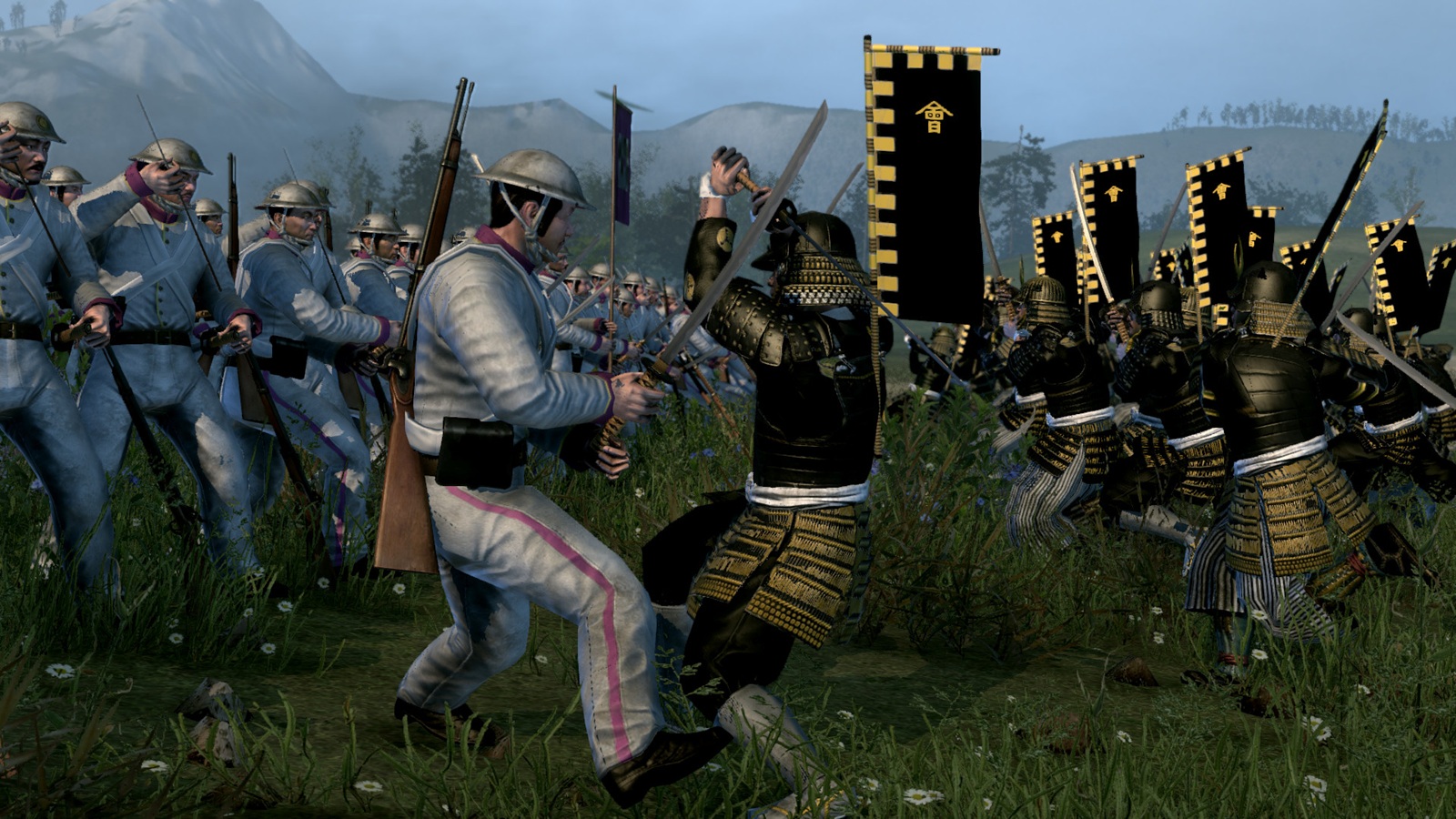
Total War: Rome II

I’m afraid all the improvements in the World that Rome II made are for naught. I cannot enjoy this game due to its incredibly fast-paced battles that utterly fail to keep me engaged after the first clash, with space for longer maneuvers being negated because your ranks will start running away and depleting as soon as something goes slightly awry. However, I do recognize some redeeming qualities in Rome II, especially the fact that the game added combined naval and land battles for the first time in the franchise’s history (and last), and the whole thing, meaning the game and its accompanying DLCs put on display one of the most complete campaigns the series has ever seen, allowing players to play the most culturally diverse roster of the Ancient World.
Total War: Warhammer

My relationship with Total War: Warhammer is a contentious one. I cared not for its release. I considered that Total War was at its best as an historical series, and the idea of playing Warhammer didn’t really grab my attention. I didn’t hate the idea; I thought it was nice that Creative Assembly was tackling something new that might teach them a thing or two to bring into the historical side of things, but overall, it was not on my radar at the time.
After playing Warhammer 2, because that game is an absolute blast- but more on that later on in the article- I went back and played a campaign of Warhammer, and I came out of it equally unimpressed with what I found. The reason I think that is because, with a decade now passed, it was very clear that CA still hasn’t found the right formula for this one. The campaign mechanics were barren, the regional system was highly confusing, and the sieges all played out the same. Its saving graces were the unit and army composition diversity, something that would be greatly expanded upon in subsequent titles, the game’s atmosphere and production values, and obvious love for the source material. Nowadays, it’s worth buying to unlock its factions to play in the Immortal Empires campaign.
Total War: Medieval II

Total War: Medieval II was my second Total War title, chronologically speaking, coming a few years later after I got way too deep into Rome: Total War. Back then, I wasn’t too much into Medieval history, but the prospect of playing with Portugal was enough to pull me in, and what I found was essentially the same experience as Rome. Were it not for the Third Age mod, I don’t think the game would rank as highly as it’s currently ranking. Not for any lack of merit of its own, but just because I played it at a time in my life when my interests were somewhere else. Somewhere else meaning World War 2. If you have this game in your library, enjoy Lord of the Rings, then you have to give the Third Age total conversion mod a go right now! It’s the best LOTR experience ever put to code.
Total War: Three Kingdoms

The more entries I write on this article, the more I realize that the Total War series has gone through more identity crises than an edgy teenager. Three Kingdoms came out during a time when the Chinese games market was rapidly on the rise, and Creative Assembly wanted to get some of that sweet yen-on-dollar action. Unfortunately for us, what we ended up getting was one of the best Total War games in years, whose full potential was left untouched.
Three Kingdoms is the series gold standard when one is talking about diplomacy and roleplaying, as it was directly inspired by Luo Guanzhong’s Romance of the Three Kingdoms. The whole game centered around the dynamic relationships between characters that had rivalries, friendships, loyalty, and personality traits that made them feel more consequential than any other game.
The Romance Mode was also a highlight of the game, with generals acting as bigger-than-life units capable of tearing through entire lines of regular infantrymen, like they had escaped Dynasty Warriors. The game’s ink-wash art style was another standout, and it’s possibly the best-looking game in the series right after Shogun 2, which is still unmatched.
Unfortunately, the DLC for the game was all over the place, with timelines that didn’t make a ton of sense, jumping around between decades before or after the start date, instead of improving the much-needed battle diversity and the core Three Kingdoms timeline.
The final nail in the coffin came in May 2021, when Creative Assembly abruptly announced that they were ceasing all development and support for the game, and while the idea of a sequel was floated around, it appears that it was eventually and quietly shelved.
Total War: Warhammer III

Oh! Wow! Why is Warhammer III so low here? Well, that’s because I’m a major fan of the Warhammer II Eye of the Vortex campaign, much more so than the End Times of Warhammer III. Also, the starting factions of Warhammer 2 are just perfection when compared to Warhammer 3. One thing I’ll give the third entry the upper hand is, obviously, the massive Immortal Empires campaign: If you own the games in the trilogy, they all come together to create the biggest Total War experience to date, with over 250 AI players. How about that for scale?


Leave a Reply