
Introduction
There’s no getting around the fact that the genre of wargaming is a complicated one. Some games do make it easier to get into, that’s true. They do so by streamlining or abstracting mechanics, putting some effort into creating a clean and intuitive user interface, and putting a greater emphasis on a part of warfare instead of others, to keep the player centered around it, while everything else is a bit more superficial. However, there’s a substantial portion of titles that are not like that, be that for whatever reason it may be, and it’s often by design, due to the amount of “things” going on at once.
As someone who started their wargaming journey some 12 years ago, I put together a small list of tips and tricks for beginner wargamers who want to jump into the genre but are often intimidated by the sheer scale and depth of some of these titles. These are generic tips that should apply to 90% of titles out there, and should help you out a great deal to make the most of your journey. Even if you’re experienced, some of these tips will help you out in major ways as well!
Build the Historical Context

Almost every other wargame out there is based around an historical setting. After all, wargaming as a concept was created to study the art of warfare. In 2026, it’s hard to find a period in Human History that hasn’t been featured in some sort of digital warfare application, and each of those has its unique tactics, military doctrines, equipment, capabilities, and limitations. Most wargames go to extreme lengths to try to simulate every aspect of the conflict it’s trying to emulate. It’s only natural that, if you’re unaware of what The Hammer and Anvil are, and you’re playing as Alexander the Great, the chances of you finding any sort of success are slim to none. The same can be said for things like how to properly siege a castle in Medieval Europe, or how to use a Creeping Barrage in the First World War.
The game Fallout exclaims that “War. War never changes”, and while that might be true for the underlying motives and human cost of the conflicts, war does very much change. It changes often. In ways that are mostly organic and hard to predict.
As a rule of thumb, the closer you are to the present day, the more complicated the art of warfare becomes, and the bigger the number of things weigh on the decisions you’re making. In Roman times, you did not need to worry about the proper deployment of lines of fire. During World War 2 unmaned aerial vehicles and drones were not as concerning as they are today, and things like missiles, sensors, and helicopters would only show up after the war. So, if you’re new to this, try to get a read on the nature of warfare of the period you’re currently playing. Even if it doesn’t directly help you succeed in that particular game, at least you’re reading and learning something new that might come in handy later.
Study the Geography of The Conflict

History is great for contextualization purposes, but real battles happen in real locations: Open grassy fields, dense forests, rolling hills, populated cities, small towns, roads, and everything else in between. It’s hard to find a geographic location that hasn’t been scarred by strife. The terrain you’re fighting on is the biggest predictor when it comes to battlefield success, even more so than morale, equipment, leadership, and doctrine. True mastery of warfare comes from putting all those factors together to pull off something incredible, and History is filled with examples where terrain made a substantial difference, even against insurmountable odds.
At Thermopyle, the Greek Army was able to hold the Persian advance by forcing them to fight on a narrow strip of land that greatly reduced the impact of their numbers. At Masada, its residents resisted the Roman siege for months due to the mountain-top location of the complex. At Agincourt, the English decimated the French cavalry as they struggled to advance on a muddy field. In WW2, the Germans used the perceived impassability of the Ardennes Forest for tanks to circumvent the Maginot Line. History is filled with examples where the proper use of geography is instrumental in winning.
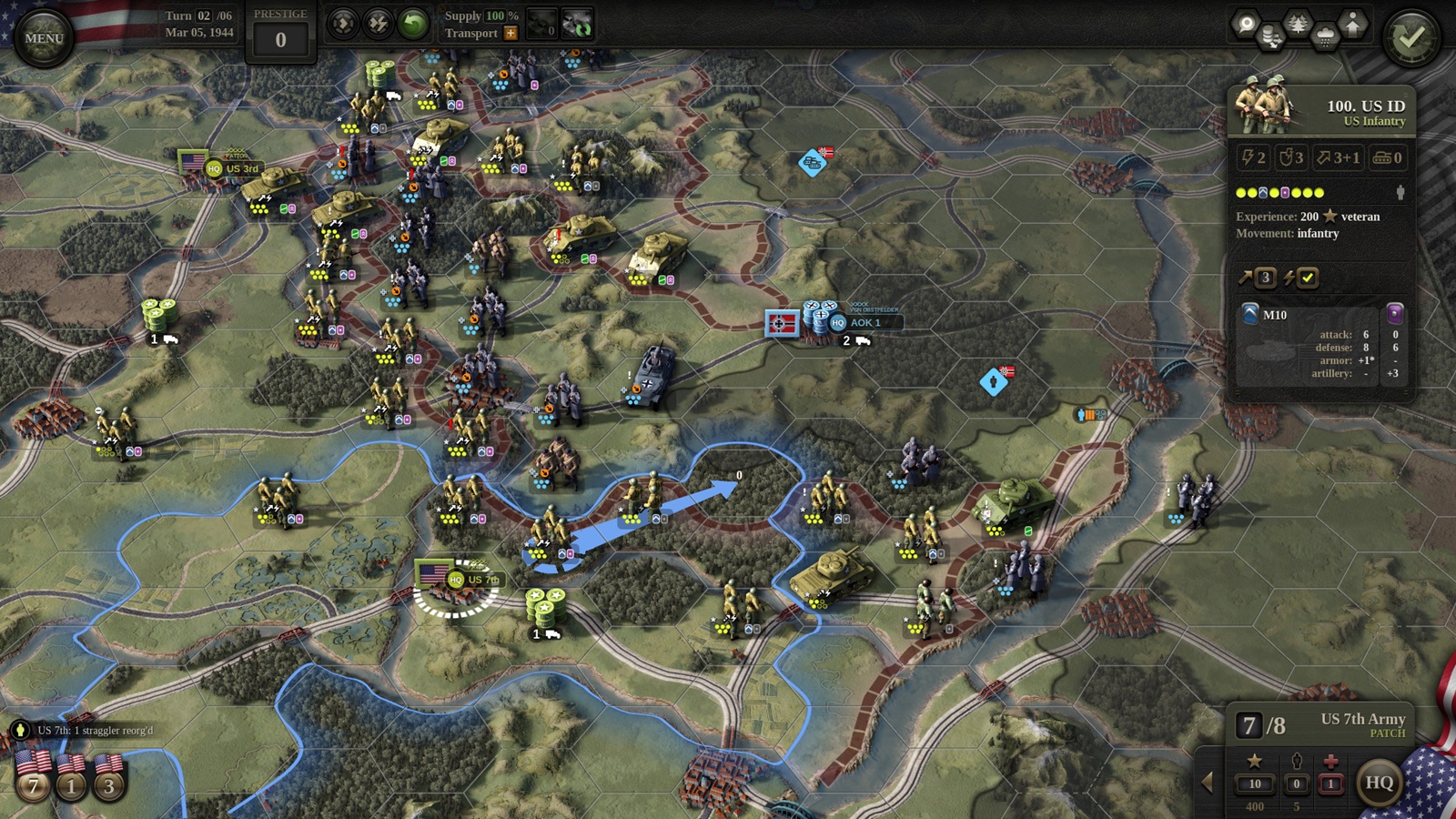
Before you move a single unit or make a decision, use the first turn to have a look at the geography of the battle you’re about to fight, identify natural strongpoints and obstacles, and study how the road network can be used to your advantage to more easily move troops and supplies. See where rivers start and end, where the bridges are, and where the pivotal towns sit. Only then can you really start to formulate your strategy.
I want to touch on another massively important topic before moving on to the next point, which is the Field of Vision. Most wargames simulate a relatively accurate FOV – meaning you only see what your troops can see, and another rule of thumb of warfare is that the first one to spot and fire at the enemy is often the winner. So make sure that you don’t have only solid defensive positions, or avenues of attack, but also locations where you can gather the most amount of information so you can anticipate what your enemy is doing, and act before he even knows what went down.
Learn Your and The Enemy’s Force Composition

Now that we have context and geographical potential and limitations under our belts, there’s still some work to be done. The next step- and again, this is before you move a single squad, regiment, or division- is to study your forces. Depending on whatever wargame you’re currently playing, they’ll simulate forces differently. If you’re fighting at a more tactical and granular level, the level of analysis is going to be a lot different than if you were doing strategic planning.
Having in mind the topographical elements of the battles that’re about to ensue, how does your Order of Battle stack up? What are your numbers, and what do they consist of? Let’s say you’re fighting in World War II and have an armored column at your disposal. How many tanks are there? Of those, how many are light, medium, and heavy? Do you have enough infantry to support it properly? How are they equipped as well? What’s missing, and how can you adapt? Is there any air cover or artillery available to you? And this is only about the material side of things.
There’s a whole new level of psychology that wargames tend to simulate as well. What’s their morale and veteran levels? I cannot tell you how many times I have seen players forget to check veteran levels on their units, a stat that makes a major difference during any fight. Do the same thing for the enemy force, if you can. It might be a bit harder, as a lot of titles often hide this information unless some sort of intel has been provided beforehand.


Leave a Reply