10 Famous Historical Myths Perpetuated by Strategy Games

4 – Gunpowder Made Armor Obsolete

Cossacks Back to War Screenshot

Many games promote the idea that the introduction of gunpowder weapons immediately rendered armor useless, causing plate and mail to vanish overnight, and suddenly wearing an armor piece is just a fashion statement, but history tells a slower, more nuanced story. For centuries after firearms appeared on European battlefields, armor evolved alongside gunpowder, becoming thicker, more specialized, and even proofed against early bullets. Cost, mobility, training, and changing tactics were the factors that ultimately drove armor’s decline, with cavalry and elite troops continuing to wear protective gear well into the early modern period, with some examples of it being used in World War I and World War II. In fact, what are Kevlar vests if not modern forms of armor?

3 – Battle Lines Were Small

Scourge of War Remastered Screenshot

Play any real-time strategy game, and you’d be excused for thinking that commanders could see everything and control everything too, because the battle lines only extend for a couple of hundred meters at most, and sometimes not even that. Games often depict historical battles as tightly packed clashes between relatively small forces, creating the impression that battle lines were short and visible to anyone with a modicum of distance and high ground. In reality, many historical engagements, especially from the early modern period onward, featured vast, sprawling front lines stretching for kilometers, shaped by terrain, supply routes, and the need to protect flanks. These only got longer as warfare advanced. Armies frequently operated in dispersed formations with significant gaps, reserves held far from the front, and units that never directly engaged the enemy. This myth persists in games because large-scale frontage is difficult to visualize and manage mechanically, but it significantly understates the sheer scale, coordination challenges, and spatial complexity of real historical warfare. If you want to experience a game that does an amazing job at giving you the scale and spectacle of true battlelines, you need to play Scourge of War – Remastered.

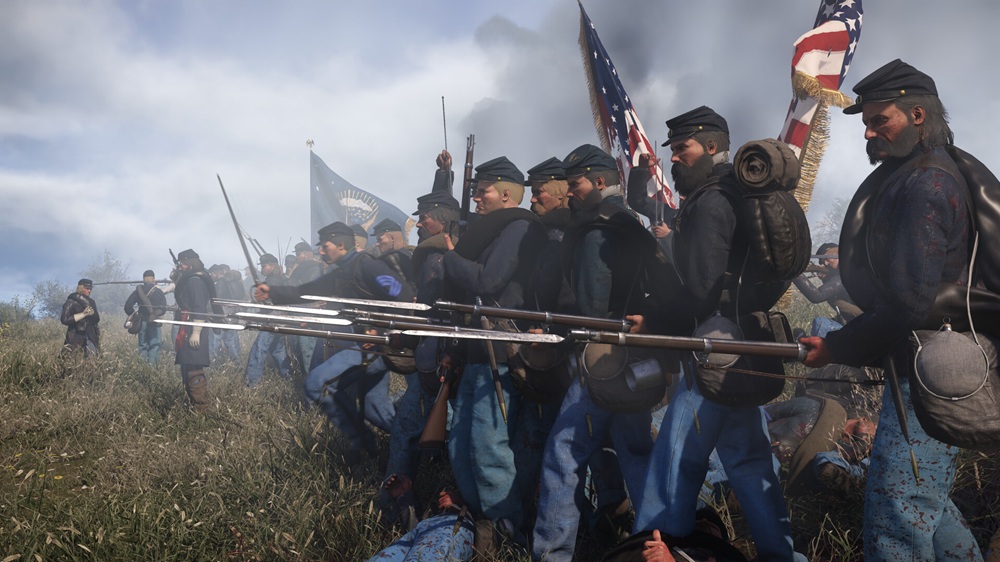
2 – Nobody Was Afraid of Bayonets, Apparently

I’m no Napoleonic era soldier, but if I saw an angry redcoat running at me with a massive spike attached to his musket, I would think twice before deciding to make a grand final stand. Strategy games really love their charge mechanics, but what’s unrealistic is what happens the moment a melee is initiated, and a unit will spend a solid amount of time with their soldiers just casually crossing bayonets, and sometimes killing a couple of guys here and there. In reality, charges were mostly used to break lines and bayonets. Historically, bayonets were psychological weapons as much as physical ones, and while actual bayonet wounds were relatively rare, the threat of a charge often caused units to break, retreat, or surrender before close combat occurred.

Pages: 1 2 3 4

14 responses to “10 Famous Historical Myths Perpetuated by Strategy Games”

  1. Just a heads up, check the spelling on #4 title. “Gunpowder”

  2. FYI Stronghold got that idea from the original Castles game. I’m sure they got it from something else before that, though.

  3. Trebuchets and other siege engines in field battles. Unless it’s the Romans, siege engines would rarely ever be used due to how long it took to assemble and reload them. One of my major annoyances with total war, they should be restricted to constructable siege equipment. Also heated sand was very common as a siege defence weapon, especially in the middle east, very nasty and almost a limitless resource!

  4. Protracted Cavalry melee combat. Cavalry was a shock weapon not a melee one, just like you mention with the bayonets, it was mostly the psychological factor that gave horsemen the the advantage. They would crash into broken units and cause tremendous damage, but any formation keeping it’s ground until the end would cause an automatic break of the charge. It was a mental game to see who would break first, discipline and drill/maneuverability were key. This was valid both vs infantry and other cavalry.

  5. AI slop, only 7 items listed.

    1. I just counted all the items, and I’m sure there are 10 of them.

    2. Your comment reads like it was written by an AI…

    3. The link I followed to get here brought me in at page 2. I suspect you did the same, but we’re too dim to notice.

  6. Orders are received instantly and understood perfectly…

  7. More of an issue with movies and games like action RPGs (not strategy games so much), but I have two major gripes: 1.) Characters not wearing helmets, and. 2.) No one gets wounded. If you’re hit, you’re dead. In the American Civil War and before, wounded-to-killed ratios in battle were commonly 4-5:1. In WW1 & WW2, it lowered slightly to 2-3:1. In modern warfare, with advances in body armor, it’s back up to 4-5:1.

    As for strategy games, it’s always driven me crazy that they rarely factor in advantages from elevation, and weather effects are almost never accounted for either. Both of those things play MASSIVE roles in battlefield tactics and strategies, especially in battles set in times before the proliferation of air power.

  8. Been watching the old Sharpe series based on the books by Cornwall and really gives good examples of the realities you mention like the French throwing bales of burning straw down from walls. no oil in site. And the confusion of command…looking at you silly Billy. Also its a great show to get you amped for the upcoming napoleanic game by that 7 years war/civil war dev Oliver Keppelmüller.

  9. Bernie Brightman Avatar
    Bernie Brightman

    Guess what: hardly anyone’s playing medieval war games. It’s all WW2 and a little Napoleonics, so relevance?

  10. […] the recent success of my 10 famous historical myths list, and with over 25 years of experience playing history-related titles under my belt, I wanted to […]

Leave a Reply

Trending

Discover more from Strategy and Wargaming

Subscribe now to keep reading and get access to the full archive.

Continue reading

Discover more from Strategy and Wargaming

Subscribe now to keep reading and get access to the full archive.

Continue reading