

Unmasking Video Games: The Top 10 Historical Myths Games Are Guilty Of Perpetrating
Video games, in my opinion, are the best way to experience the historical reality of times gone by, as they have the unique ability to transport us to incredible worlds, allowing us to wield legendary weapons, command vast armies, and take on the role of powerful men and women. Yet, in their quest for engaging gameplay and cinematic spectacle, many titles inadvertently perpetuate historical myths that have cemented themselves in the minds of millions. From the perceived invincibility of German tanks to the idea that every medieval warrior wielded a sword, these gaming tropes, while fun, often distort the true nature of past eras, battles, and technologies. Join me as we get together to unmask the top 10 historical myths games are guilty of perpetrating, separating exciting fiction from fascinating fact, and forever changing how you look at history in your favorite virtual worlds.
10 – The Myth of Invincible German Tank Armor
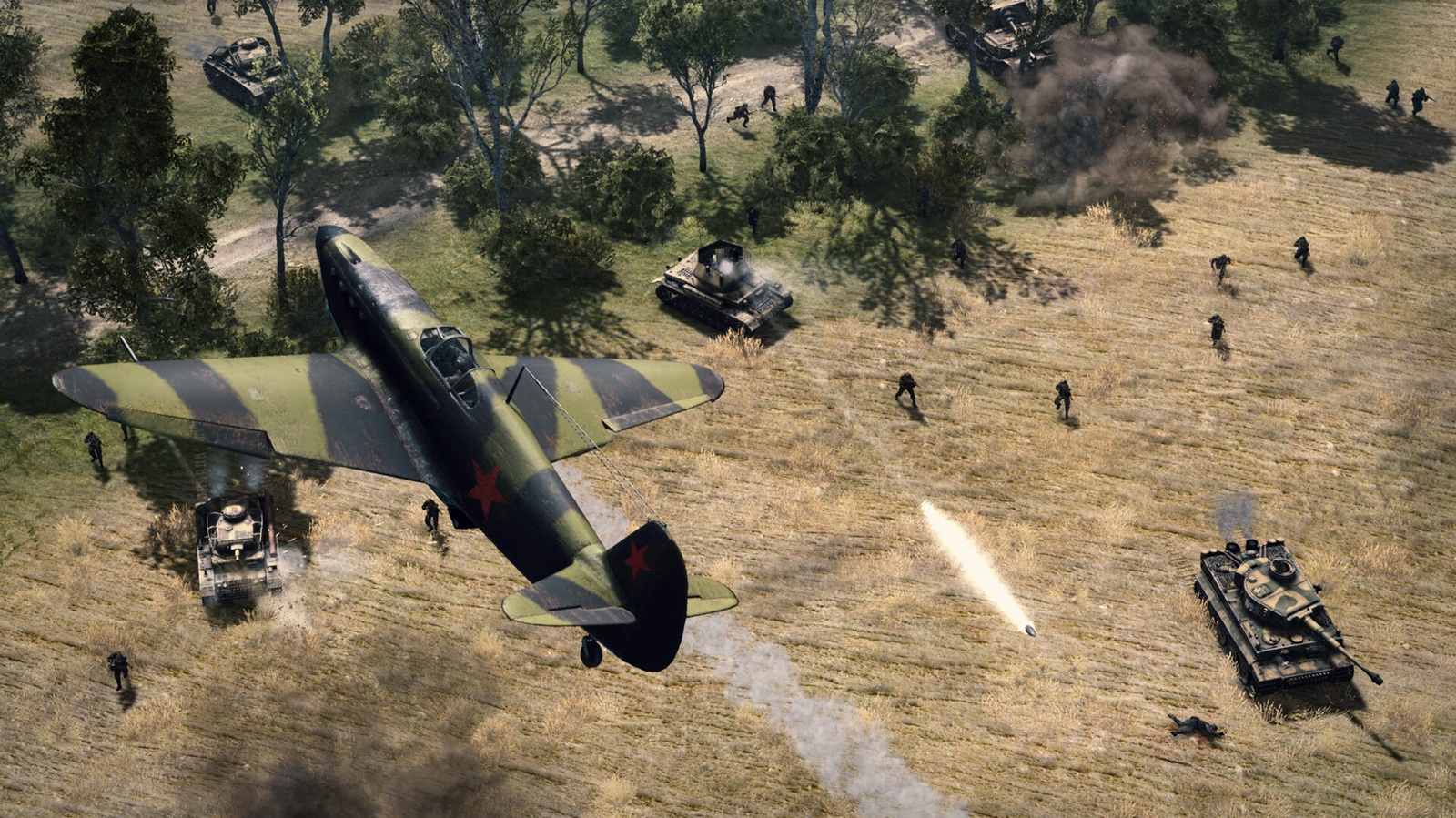
There was a time, long, long ago, when the internet was crawling with unsavoury creatures, who went yet unnamed. They would be baptized under the name of the Wehraboo. Their origins traced back to the hundreds of poorly produced World War II documentaries of the late 1990s and early 2000s, from which they became staunch defenders of the myth of German armor superiority. Stronger, faster, well-armed, and with bigger guns, the mythical Tigers and Panthers were only defeated by the sheer capacity of the Allies to churn out Shermans and T-34s. Games, unsurprisingly, mirrored this mentality, from the cramped bocages of Company of Heroes, the massive success of Battlefield 1942, to the grittier Men of War, the german tanks always enjoyed a special status, but in real-life, despite being, arguably, somewhat superior to their direct counterparts in terms of raw firepower, battles aren’t won by numbers alone, and doctrine, tactics, supplies and morale are all soft-factors which aren’t as easy to translate into hard-coded numbers. Historically, German armor, like all armor, had vulnerabilities often overlooked in games. Crucially, these “high-performance” tanks suffered from frequent mechanical breakdowns, with many lost to mechanical failure or abandonment rather than enemy fire – a detail rarely, if ever, seen in gameplay. Furthermore, logistical nightmares like fuel shortages and a lack of spare parts severely hampered their effectiveness. As the war progressed, Allied anti-tank weaponry evolved to counter them effectively.
9 – Everyone Used a Sword
Walk into almost any ancient to medieval historical action game – from the medieval European battlegrounds of Chivalry 2, to the Ghost of Tsushima Japan, and even any Total War title, Age of Empires, and Stronghold, and you’ll likely find swords dominating the arsenal. Games often present a world where every warrior, guard, and even common bandit wields a blade, perpetuating the myth that the sword was the primary or even sole weapon of choice across various historical eras. Despite being romanticized everywhere, swords were never looked at as an extremely practical weapon for the standing armies of the time. More practical, cost-effective, and devastating weapons like spears, axes, polearms (halberds, pikes, glaives), bows, and even humble clubs or agricultural tools were far more prevalent for the common soldier or peasant levies across various cultures and centuries. It’s not that the sword was a bad weapon, per se, but it all comes down to economy of scale: Swords use a lot of raw materials, are hard to properly craft, and difficult to service. With the metal a blacksmith would use to craft one sword, he could make several spears. The sword is also a cutting weapon, meaning that to be useful, it needs a relatively large surface area to cut, while spears are mostly thrusting weapons. It’s reach is also a limiting factor in the battlefield, but very few men were as brave as videogames portrays them to be, and you often read in historical chronicles of lines of men slowly stopping their charges right before they reach the enemy, so the longer the weapon they had, the more likely they were to just point at the enemy and strike something.
8 – D-Day Bunkers Weren’t Always Massive Fortresses
From the iconic third mission of Medal of Honor: Allied Assault to the intense beach assaults in Men of War, Company of Heroes, and Call of Duty: WWII, D-Day in video games often portrays the Atlantic Wall’s German bunkers as gargantuan, impenetrable concrete behemoths bristling with heavy guns and machine gun crews. This cinematic exaggeration came as an artistic freedom taken by Spielberg from Saving Private Ryan in order to redirect the audience’s attention to a specific goal the soldiers had to achieve. In real life, the defensive positions at the Normandy beaches didn’t look as massive, but were far more deadly: they were built into the cliffs, were extremely hard to spot and even harder to destroy, and created overlapping fields of fire, firing on enfilade, and not straight on. Many positions were smaller, reinforced concrete pillboxes, gun emplacements, or open firing positions, rather than the massive, multi-room complexes often depicted. Crucially, the “big bunkers” with heavy naval guns were relatively few and concentrated at strategic points like the Merville Battery or Longues-sur-Mer.
This was, naturally, adapted into video games with Medal of Honor (Steven also had a hand in the making of the series), and this video game trope still lives on to this very day, distorting the perception we have of the true challenges faced by the Allied Forces on that day.
7 – Engagement Distances Are All Wrong
If video games are guilty of perpetrating one myth over all others, I would have to say it is the distances from which all firefights happen. Aside from a couple of exceptions, such as Armed Assault and Hell Let Loose, almost every first-person shooter and strategy game showcases firefights as claustrophobic affairs, where men fired at each other in so close proximity that one would wonder how anybody could even miss a single shot. This prevalent video game myth creates a sense of immediate danger and constant spectacle, but it fundamentally misrepresents how combat unfolded across various historical eras, from ancient skirmishes to modern warfare, impacting both strategy and weapon effectiveness.
Historically, most military engagements, regardless of the era, occurred at much greater distances than typically depicted in games. Ancient and medieval battles heavily relied on ranged weapons like bows, javelins, and slings, softening up enemies long before melee combat ensued, and even when lines clashed, polearms like spears and pikes – often reaching 10-20 feet – ensured combatants maintained significant separation. In the age of firearms, from muskets to machine guns, effective ranges could stretch for hundreds of meters, with soldiers often firing from concealed positions or across open fields. Games frequently condense these vast distances, turning strategic engagements into glorified arena fights, thereby understating the importance of positioning, formation, and the psychological impact of distant, unseen threats. If you want to try this out for yourself, go to Google Maps, draw a line from where you are measuring between 200 and 400 meters in length: that was the average fighting distance in World War 2.




Leave a Reply to NomadBGCancel reply