

Were it not for the fact that Nightmare Frontier was picked up by Slitherine Games, there’s a very big chance that I might, unfairly, have skipped what one of the funnest turn-based strategy action games I have had the pleasure of playing in 2026.
Why? Well, it has nothing to do with the game’s merits, or first impressions, or Steam Page (well, the game’s Steam page also didn’t make it any favors, but that’s something I don’t need to discuss here), but it has more to do with the fact that the game is associated with a genre that, has overstayed its welcome in my mind, to the point that, during these days, every time I hear the words “extraction shooter”, my eyes rollback so further that I can see my own thoughts forming on the back of my head.
- Genre: Turn-Based Strategy / Extraction Looter
- Developer: Ice Code Games
- Publisher: Slitherine Ltd.
- Price: $24.99 | 25,49€ | £22.49
- Release Date: 22 July, 2026
- Reviewer: Nuno Marques (PC)
- Target Audience: Turn-Based Strategy players; Horror game players; Extraction Looter fans;
- Final Score: 7.5/10

So, naturally, seeing a game described as a turn-based tactical extraction looter, my immediate impression was that of “oh man, this looked so cool, but I don’t need turn-based Escape From Tarkov at the moment”, and I put the game on the back of my mind. However, anytime I did some research for an article, it constantly came up, and once it was picked up by Slitherine midway through Early Access, I figured that the game must have something going for it; otherwise, this wouldn’t have happened. Fortunately, I gave it a try a couple of weeks later, and here I am writing this review.
Let’s run with the whole “tactical extraction looter” thing, because that’s the most generic way to describe it, but it really doesn’t do the game any justice. Let me explain the tactical part of that terminology: Nightmare Frontier is a turn-based strategy game that keeps itself very close to Into the Breach in terms of combat, which was something that I was not expecting to see, and a very welcome decision, but more on this later. The whole “extraction looter” part of the equation means that the gameplay loop is based around the idea of undergoing endless expeditions into parts of this coastal western town, during which you’ll encounter enemies, boons, and of course, loot.
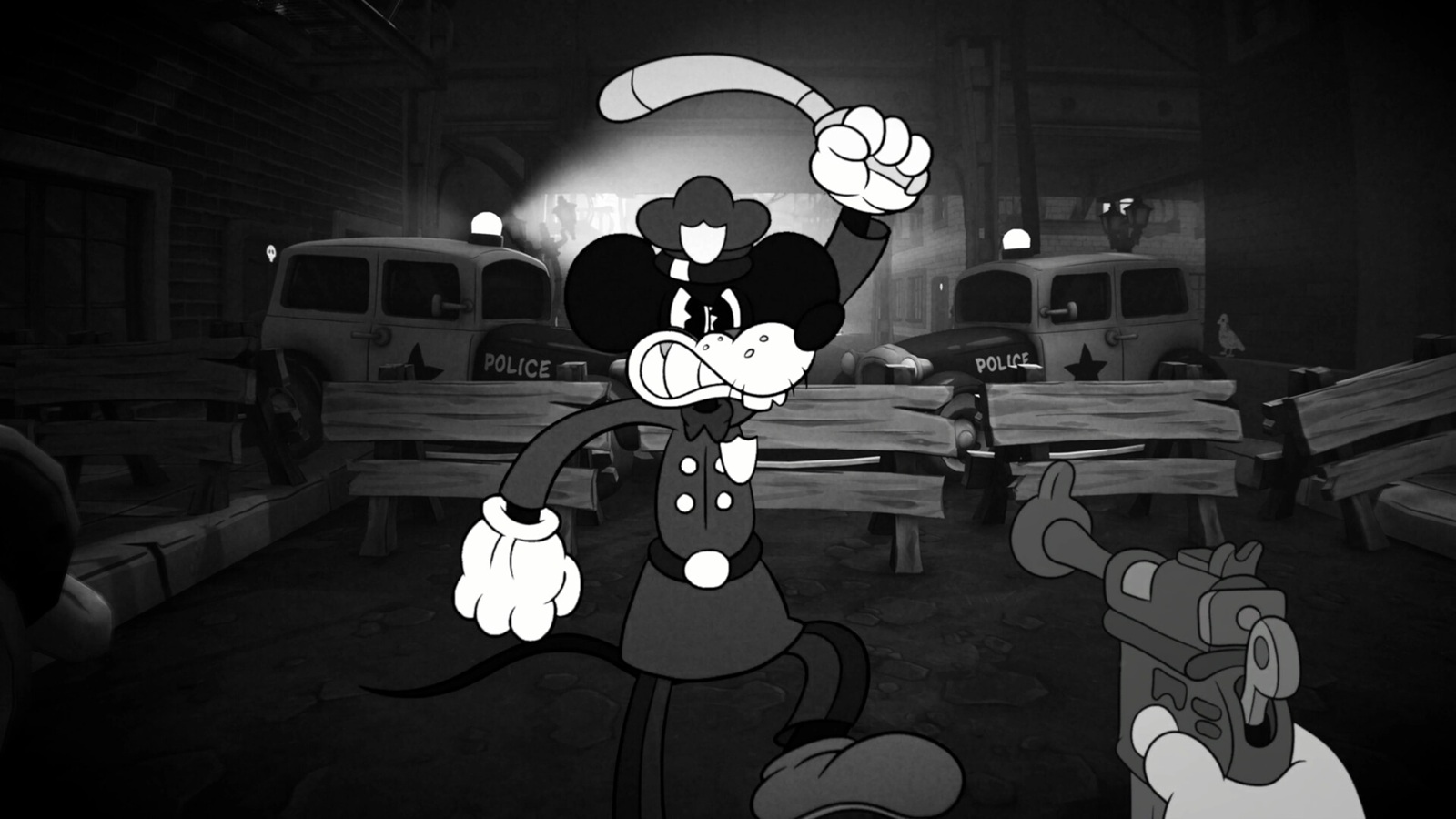
The game is set in an early 1900s western coastal city that has been overrun by humanity’s nightmares made manifest. These are a classic mix of Victorian Gothic horror and American folklore. The classics are all here: there are wendigos, creepy manikins, Pumpkin-head monsters, cleaving cannibals, scarecrows, damned souls from hell, twisted evil-trees, and a plethora of other creatures, each with their own moves and abilities. As someone who enjoys western and horror stories, this is something that was, of course, right up my alley. The game has quests and side-quests to guide you along your journey and progress forward in the story.
The basic gameplay loop is relatively simple: you take a team of ever-growing survivors (you’ll be able to find survivors on your expeditions) on an expedition into a part of the town. Each expedition is composed of nodes (imagine FTL, or Slay the Spire), and those can be enemy encounters, story bits, boons and buffs, healing moments, or extraction points. Speaking of which, all expeditions in Nightmare Frontier are endless. You can run them for as long as you like, picking up as much loot as you can (you’re limited by the size of your inventory space), and your only limitation is the extraction points you’ll find, which in and of themselves are not sparse. Overall, the game ended up feeling more like a roguelike experience instead of an extraction looter one, because that’s what it is. A roguelike turn-based strategy game where you pick up loot after combat, decide what to keep, and then move along to the next one until your party is wiped, or you extract, and this is perfectly fine by me. It made the game a lot less stressful than what I originally anticipated it to be.

While the core gameplay loop is solid, the highlight of Nightmare Frontier is the combat. It is brief (most runs will have you fighting dozens of combat scenarios, so this is a big plus and keeps things from getting boring or dragging on for too much). Combat is turn-based, and mixes elements from XCOM (the grid-based combat and the UI), Gears of War Tactics (aggressive combo elements), and Into the Breach (enemy and environmental manipulation). Most fights can be done and over with a single turn, provided you have the necessary gear to do it (you will, just after your first couple of expeditions). They rely on proper positioning, setting up combos, enemy and environmental manipulation, and the creation of kill-chains that allow for the elimination of most enemies in a single turn, if you play your choices correctly.

Each survivor has their own class, dictating what kind of equipment they’re able to equip, and their combat role. It’s their weapons, however, that have the biggest influence on the battlefield, as each one can have several unique abilities. Some will reposition enemies (by moving them to other squares), others will pierce them, some can fire different types of bullets for different status effects, and explosives like dynamite sticks and mines will deal area-of-effect damage. There are a ton of different weapons in here, and if experimentation is something that makes your brain tick, Nightmare Frontier has plenty of that going on. The progression aspect of constantly unlocking new playthings is also a major draw, and one of the contributing factors to why I have spent so much time on it.
Weapons are the tools you’ll be using to wreak havoc on the nightweavers, but it’s by manipulating enemies’ locations and the surrounding environment that you’ll be able to start running through encounters in just a couple of turns. Most abilities will reposition the enemies in some way, and by pushing them against each other and the environment, extra damage will be dealt. Most of my playtime was spent experimenting around with how to move enemies about in order to set up the most perfect (and biggest) killchain possible in a single turn. This is why I said earlier in the review that Nightmare Frontier is more akin to something like Into The Breach.
Interestingly enough, there’s a lot of melee action in Nightmare Frontier, which is something I have always found funny, and completely out of left field in a setting that’s supposed to be all about the fear of monsters. Why is a human killing 3 supernatural creatures in a row he’s deadly afraid of? It’s a bit silly setting-wise, but from a gameplay perspective it makes sense, since most arenas are that small. I just wished the team could have made some in-universe reason for why this is. Something as simple as a magical glove or other sort of gizmo could have done the trick just fine.
One very interesting aspect of Nightmare Frontier I have just briefly touched upon is the fact that each survivor has their own fears. These fears will directly influence which enemies they’ll face during their expeditions. For example: a survivor with a fear of spiders will spawn gunspiders, one that fears death will bring upon the team the Grim Reaper, the one who fears fire will make manifest Crispy Petes, and so on. By influencing the sort of creatures you’ll encounter, these fears also directly influence the nightmarish materials dropped by said creatures, as each creature drops unique materials. It’s only natural you’ll find yourself juggling what survivors you’ll be taking on an expedition, based on the sort of nightmarish resources you’re looking after to upgrade your loot.

The system is well designed and well implemented, and blends the thematic aspect of facing each individual’s team fears with gameplay mechanics. It’s quite possibly the second best aspect of the game, right after the weapons.
I have enjoyed the collection aspect of this game a lot more than I had originally anticipated. Each weapon picked up during expeditions can range from regular to legendary, and each of the rarities has its special skills. A normal revolver is limited to a single shot per turn, while a rarer one will give you options to use different bullets for different status effects. A basic shotgun will damage and push enemies back, but an ethereal one will deal extra damage and even change the scatter pattern for different enemy manipulation. As for the weapons I have encountered so far, I was very surprised to see that there isn’t a ton of grind needed to find something decent, maybe just a couple of hours and you’ll be rocking a very powerful loadout for nearly all your team members, which was another great incentive to keep playing. As a busy adult, I cannot justify -nor do I want to- spending hundreds of hours looking for a single item in a videogame.
Your loadouts aren’t limited to your weapons, and there are other pieces of equipment like utilities and cloth pieces that can also be upgraded as you venture deeper and deeper into the city. There’s also a headquarters upgrade mechanic that will unlock new weapon and equipment upgrades as well as some buffs. It’s a very satisfying loop that I have enjoyed a lot throughout my time with the game, but…Despite its great job in combat design, which in and of itself is already a great endorsement on my end, I do think some aspects of the game could be improved.
First, and my major issue with the game, is that while combat is great and tightly designed, I can imagine this will be getting rather repetitive after a while, especially once you’ve seen all the enemies and ventured out into every city part. While games like Into The Breach might have suffered from the same problems, the fact that the game built itself around the idea of playing with different mech squads, each of which has a learning curve and its own upgrade paths, meant that each unique squad was a playthrough of its own. The focus on the loot of Nightmare Frontier removes that element entirely, so your variety of gameplay is limited to the weapons you can find or craft.
The available enemies in here are great, and the fact that each of them has its place on the battlefield is something that I can always appreciate in a game, but I cannot help but feel that the game needed a briefer roster of creatures, and some regular boss encounters would also go a long way in making runs feel a bit more tense.
My last point of criticism is that after a while you’ll start to recognize a lot of the same combat scenario types, even though everything else is randomly generated. The game could have benefited tremendously from having more variety in this aspect as well.
Performance-wise, I have nothing to point out. It works well, with no fps dips or any sort of weird graphics problems. Besides, the game also looks relatively decent, so that’s a plus. Sound is also ok. I’m sure most people won’t have any trouble running it on their machines.
FINAL SCORE: 7.5/10
In the end, Nightmare Frontier is a fun entry to a very stacked 2026 lineup of excellent strategy games. Its combat is tightly designed, and the gameplay loop of adventuring, extracting, and collecting will have the collector within players adventuring deeper and deeper into their expeditions in search of greater and better loot. Is it going to be your next turn-based strategy GOTY? Well, it won’t beat MENACE for me, but I’m sure it will rank on my top 20 strategy games of 2026 unless something drastically changes and we get some amazing shadow drops until the year comes to a close.
Support Strategy and Wargaming
I do what I do in Strategy and Wargaming because I love to do this, and I’m never going to stop. If you would like to support me with that, you can buy me a coffee for a dollar if you’re feeling generous. If you can’t, no worries, Strategy and Wargaming will always be free, and I’d love to have you around!


Leave a Reply