
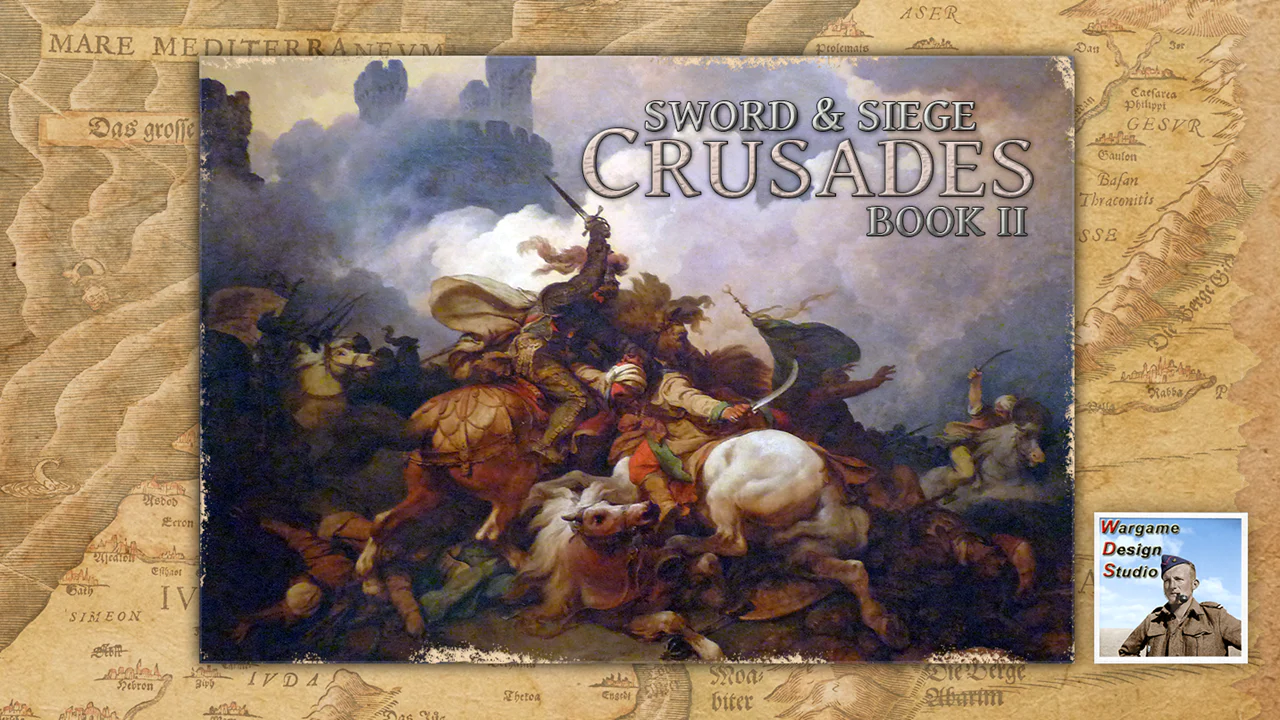
The Crusades are frequently invoked by politicians and religious groups to capture the public imagination. Often, the era is misinterpreted to serve modern agendas, and even history books can be clouded by ideological bias. At Strategy and Wargaming, we strive for the same level of objectivity as the game’s creators. While my colleague Nuno focuses on Medieval history from a European perspective, I have studied Islamic history, law, and theology since the age of 17. I even took courses from an Islamic online school from Jordan. My studies even led to an invitation from an Army Colonel to discuss regional history with an Afghan General.
- Genre: Turn-Based Strategy | Wargame | Historical Strategy
- Developer: Wargame Design Studio
- Publisher: Wargame Design Studio
- Price: $39.95
- Release Date: 13 February 2026
- Reviewer: Chris Irwin (PC)
- Target Audience: Turn-Based Strategy Players, Wargamers, Crusades History Buffs
- Final Score: 9/10
To prepare for this review, I consulted Thomas Asbridge’s The Crusades for its objective scholarship, James Reston Jr.’s Warriors of God for its narrative flair, and the Great Courses series How the Crusades Changed History. Although I received my key later than hoped, these sources provided a firm foundation for evaluating the game’s historical authenticity.
Who is This Game For?
This title is built for fans of turn-based strategy or tabletop gaming who possess a passion for the Third and Fourth Crusades. It’s a fascinating era defined by the “bromance” between King Richard the Lionheart and Sultan Saladin. For those interested in the atmosphere, I recommend watching Ridley Scott’s Kingdom of Heaven followed by the 1963 Egyptian film Saladin; they function as a perfect cinematic sequence showcasing history’s most famous rivals.
Potential players might ask why they should buy this over Field of Glory II: Medieval. While FOG 2 features only one epic battle from the Third Crusade (Arsuf), this WDS title includes over 100 scenarios that are like FOG’s epic battles. Given, some are variants of historical events, but these are thoroughly researched variants and very well thought out. The game picks up where the first Crusader title left off—covering Nur ad-Din’s conquests, the Frankish defense of Outremer, and the eventual chaos of the Fourth Crusade.
Historical Scope and Scenarios
A Feast for History Buffs
In 1149, the game places you where Nur ad-Din is still campaigning against Crusader forces like Prince Raymond of Antioch, as Raymond attempts to forge an alliance with the mysterious Ismaili Assassins. Fast forward to 1167, and you can play as a young Saladin, fighting alongside his uncle Shirkuh bin Shadhi under Nur ad-Din’s orders against the Shia Fatimids during the final years of their empire. By 1183, the game covers the tense confrontation between Saladin and Raynald de Châtillon at the Siege of Kerak.

The 1187 scenarios naturally feature the famous, bloody Battle of Hattin—with Raynald de Châtillon appearing once again—leading into the legendary sieges of Jerusalem, Tyre, and Acre. Here, King Richard the Lionheart arrives to disrupt Saladin’s plans. To top it off, the game even includes Barbarossa’s scenario and concludes with the Fourth Crusade and the assault on Constantinople. This isn’t just a “greatest hits” collection; it is an exhaustive catalog that would make any studious history buff drool. Each battle comes with high-quality historical briefings. While I noticed a few missing engagements—such as Saladin’s conquest of Zengid territory or the Battle of Myriokephalon—I really had to use a magnifying glass to find those gaps.
If you want purely historical battles rather than randomized orders of battle and generic terrain, this is the game for you. A glaring difference between this and Field of Glory II: Medieval is the focus; in FOG 2, you often play just before or after a major engagement. In Crusader, you get the “main course”: the actual siege.
Sieges and Mechanics
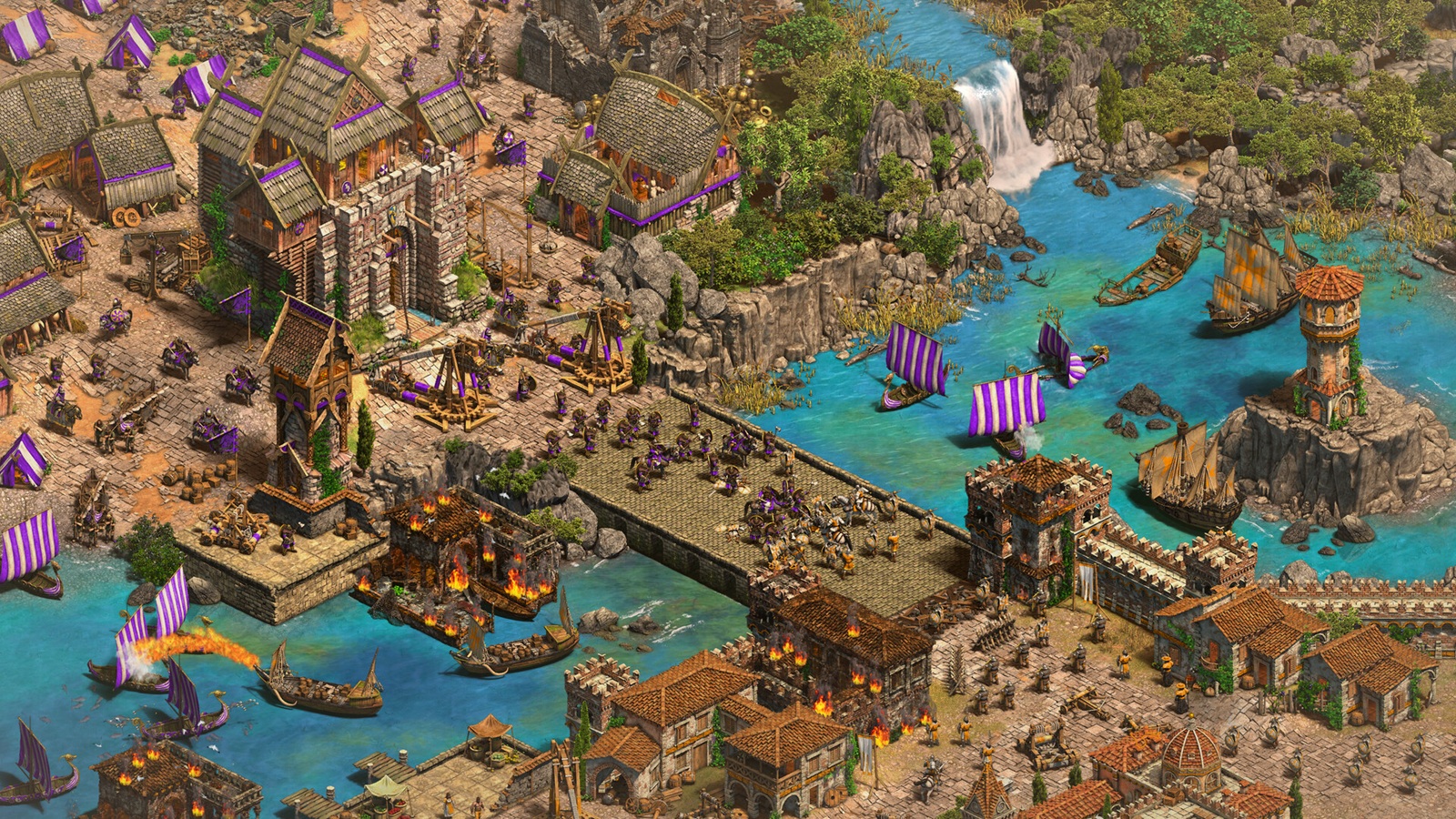
The sieges represent a painstaking effort to differentiate this title from other WDS games. Unlike Age of Empires, where you simply knock down walls with trebuchets, this game utilizes historically accurate sappers and siege towers. It avoids the “Hollywood” spectacle of massive engines smashing everything instantly, opting instead for a more grounded approach.

Another departure from FOG 2 is the emphasis on troop movement across much larger maps. You can zoom out to a 2D mode using either unit graphics or board-game-style counters. While it lacks the flashy animations of FOG 2, the art is historically authentic and vibrant, featuring everything from Templar crosses to Islamic calligraphy on shields. The unit portraits for Saladin and Richard look “Mega Chad”—beautifully rendered to enhance the authentic experience.
Tactical Impressions
I started with the Battle of Inab, where I successfully used hit-and-run tactics to overwhelm the Ismaili forces. I then tested the AI by playing as the Muslim forces during the Siege of Bilbeis. It’s worth noting that the AI is still being refined for certain scenarios; for instance, the Crusader AI didn’t always move its siege equipment far enough away from my archers and spearmen. It is generally best to play the “recommended” side for the most optimized experience.
The difficulty ramped up significantly at the Battle of Al-Babein. I lost playing as both the Crusaders and the Muslims. I tried using the Muslim forces by setting spear-and-sword barriers for my archers, but the AI outmaneuvered every tactic I threw at it. When I switched to the Crusaders, I mistakenly assumed the game was unbalanced in their favor and got wiped out trying to steamroll the light Muslim forces. Historically, the Muslim forces fought with speed to exhaust their enemies, while the heavily armored Franks relied on aggression and brute force—the game captures this dynamic well.
Balance and Realism
One mechanical quirk I noticed is that Muslim spearmen and swordsmen seem unable to initiate attacks against Crusader cavalry directly; their only defense is to seek blocked terrain. In the FOG series, you can at least attempt an attack, even if it’s ineffective. I couldn’t find historical accounts suggesting that Arab infantry were physically incapable of engaging knights with spears, so this may be a specific design choice.

During the Battle of Hattin, playing as the Saracens, I found it difficult to recreate Saladin’s definitive victory. My horse archers felt underpowered, killing only 3 or 4 men per volley while the enemy archers were taking out 14 at a time. I don’t believe Saladin’s forces were of such low quality at the height of his power. However, I managed to win by exploiting a gap in the AI’s formation to grab victory flags.
Final Thoughts on Authenticity
For the Siege of Constantinople, I felt the terrain looked a bit too much like a “desert city”—I’d love to see a mod for greener tiles there. That said, the map itself is a glorious, difficult challenge to besiege.
Some might ask why I focused so much on the Muslim perspective. As historian Paul Cobb notes in The Race for Paradise, the vast majority of Muslim accounts of the Crusades remain untranslated in English. Because the developer (named after Richard the Lionheart) has made the Muslim side so detailed, you can imagine how much care went into the Crusader side. Every historical figure is here: King Amalric, Baldwin IV, Conrad of Montferrat, King Guy, even King Phillip hiding between the armies, and King Richard eager to do battle.
It’s a good thing to have the Crusader side so well represented in this game since the Crusader perspective is so unique in history, its lore feels more like Warhammer than anything else. You have holy relics that give the aura of holy powers and a King Champion who leads from the front, smashing enemies away with brute force.
Minor Critiques
Campaign Scope: The campaign is currently only recommended from the Crusader perspective. Given how interesting the Third Crusade is from the Muslim side, a dual campaign would be a great addition.
Terminology: Naming the factions “Crusade” and “Anti-Crusade” is a bit of a letdown. It lacks the flavor of the era—much like calling WWII “Allies vs. Anti-Allies.”
Historical Gameplay: At times, the Crusaders feel like a professional modern military while the Muslim forces feel like unconventional irregulars. In reality, they were near-equals in tech and training. This is likely a balance decision, because if horse archers were as effective as longbowmen, they would be too overpowered.
According to the Byzantine Emperor Leo 6 in his battle manual “Taktika”, he points out how the Muslim armies fought just as hard with similar equipment as Roman forces of his time. David Nicolle, in his book “Warriors and their Weapons around the Time of the Crusades”, makes an argument that Crusader tech may have come down from Central Asia and on to Europe. This shows their forces were nearly balanced in arms and equipment. But in the context of the time, the Muslim forces were in decline from a decaying Abbasid Caliphate. While the Franks were still rising high from the revitalization of Western Europe set in motion by the Carolingian dynasty. But one can argue that Saladin’s Ayyubid Dynasty was getting the Muslim world’s momentum back since the First Crusades.
Naval & Logistics: I’d love to see water wells become vital supply nodes or victory points to simulate the “naval” nature of desert warfare. The lack of naval units for transport or boarding actions is also a minor disappointment, though I hear this may be addressed in the future.Score:
Final Score: 9/10
If you enjoy the “old school” style of the 2000s and are a fan of Crusade-era history, this is the game you want. Whether you favor the Western European or Islamic perspective, there is a mountain of content here. These niche games can be pricey, especially if you’re disappointed with the AI not being optimized for the Muslim forces in the campaign, but there is also a PBEM (Play by Email) option that you can play all the content with. No matter how you like to play this game, there is enough content here that will keep you playing for years to come. Unlike Age of Empires or Stronghold, this game is packed with history, hex by hex.
If you enjoyed this review, make sure to check the others to find the best strategy games you can play!
Support Strategy and Wargaming
I do what I do in Strategy and Wargaming because I love to do this, and I’m never going to stop. If you would like to support me with that, you can buy me a coffee for a dollar if you’re feeling generous. If you can’t, no worries, Strategy and Wargaming will always be free, and I’d love to have you around!



Leave a Reply