
7 – Manor Lords

The Medieval period is still time to many misconceptions and myths, but slowly and surely, the rising interest in this fascinating time frame has done a lot to help dispell these preconceived notions that the world was a dark and damp place, where ignorance and religious dogma ruled above light and reason, a time when people knew nothing about the world, their place in it, and acted like mindless peasants removing potatoes out of the ground so that knights may battle on the fields. Of course, this is all bullshit, and the reality is exactly the opposite of everything you just read. This is one of the reasons I love Manor Lords, a city-builder created by a single developer that portrays the harsh reality of a medieval hamlet or town, but still manages to make everything seem lively, colorful, and filled with life and enthusiasm. It’s a very authentic take on the “create your own town”, where the economy doesn’t just happen in designated mines, lumbering spaces, or a couple of farms. Instead, the game features a plotting system for housing where a lot of the economic prosperity comes from what goes inside the house, with the backyard garden providing a level of food autonomy, while workshops create specialized labor for tools, clothes, and weapons. It’s one of the best city builders ever made, and you should give it a go, especially if you’re looking for a management game.
6 – Age of Empires 4

“Woah, Nuno! What do you mean, Age of Empires 4 is here and not Age of Empires 2?” Well, I enjoy Age of Empires 2 as much as the next guy. Possibly, even more so than most people around, but when it comes to portraying History, Age of Empires 2 is not the best game around. It’s a great RTS. It’s one of the best of all time. But its mechanics are not suited to a proper representation of History, no matter how hard the game tries. As for Age of Empires 4, I have to give props to the game’s campaigns, which were designed to try to both entertain and teach players about their subjects, as between every mission, real-life footage and historical recreations of events are shown to contextualize what we’re doing every step of the way, and it never feels annoying or overdone. In fact, It’s so well made, that’s the only reason I go back and play Age of Empires IV these days. It’s just a shame that World’s Edge and Relic Entertainment didn’t release any further single-player content to focus on the competitive multiplayer.
5 – Total War: Three Kingdoms
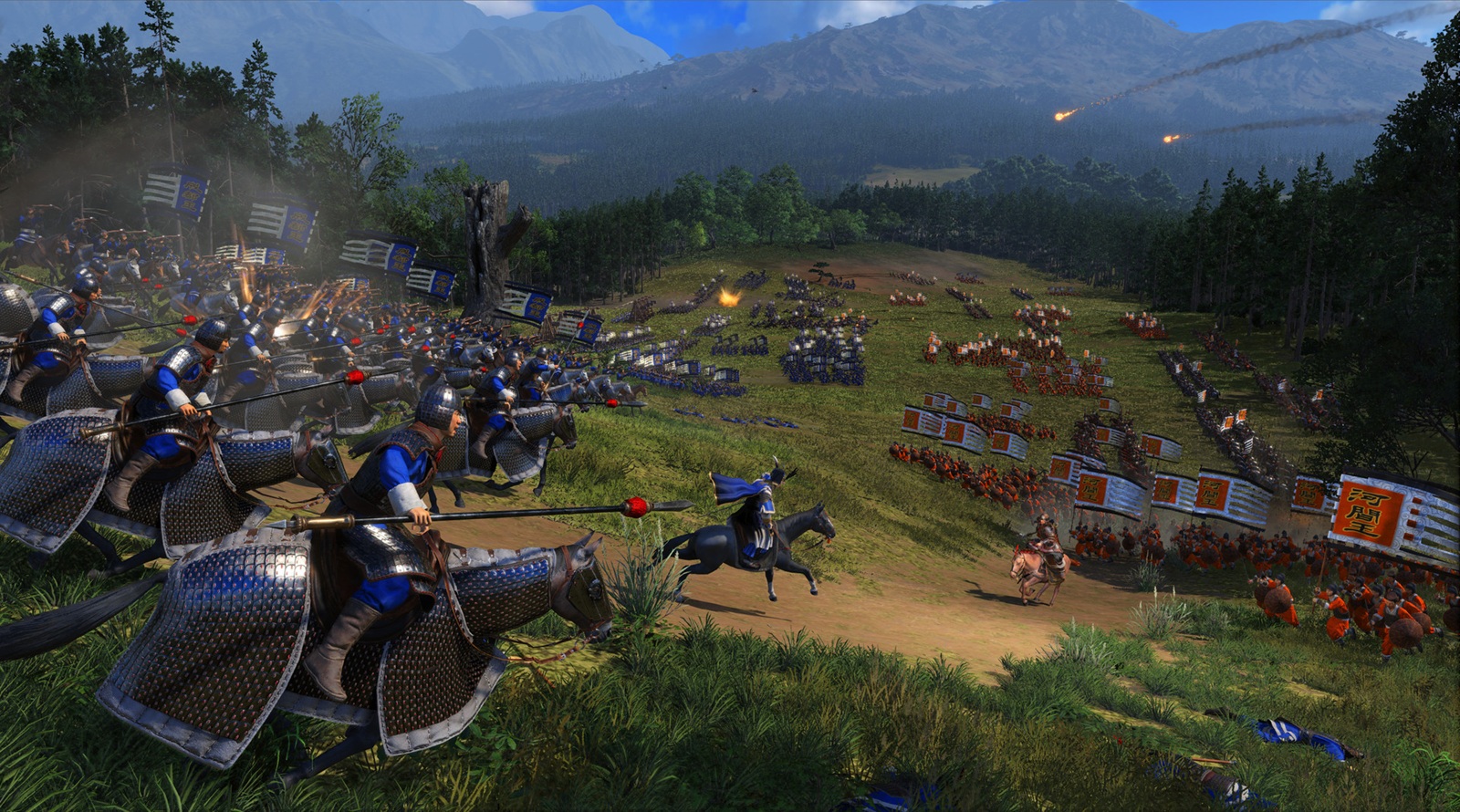
Every article that touches on the subject of history has to feature, at least, one Total War game. That is the rule we all abide by. I could have chosen any number of games to place in here. Medieval 2 wouldn’t look out of place, but there are already a couple of medieval games on the list; Napoleon would be an interesting choice as well, but with Scourge of War, it doesn’t add a lot to the article. Shogun 2 would be a top pick, but we already have Ghost of Tsushima. So, which game manages to be the most unique? I think the answer falls squarely on Total War: Three Kingdoms.
Three Kingdoms is one of the best mixes of historical authenticity while keeping the fantastical and mythical elements that make the titular setting so special, endearing, and beloved. The player can take the role of one of several legendary Warlords from the historical epic and forge their empire alongside their cast of recruited characters and heroes to command their forces. Three Kingdoms is set apart from its peers not only by its setting, but by adding new interpersonal-relationship mechanics between characters, a new way of managing armies (units are now tied to their commanders), and by introducing fantastical elements that make these historical figures feel greater than life by making them masters of combat capable of defeating legions of enemies. There’s also an historical version, if you want to keep things grounded and less fantastical. Three Kingdoms is still one of the very best Total War games to date, and its hodgepodge mix of mechanics is one of the most compelling, so much so that these mechanics impacted later games like Warhammer, and its commanding structure is inspiring the feudal system of Total War: Medieval 3.


Leave a Reply