

Ashes of the Singularity II is the highly anticipated sequel to the groundbreaking, massive-scale real-time strategy (RTS) game. Developed by Oxide Games and published by Stardock Entertainment, this epic sci-fi strategy title is set to redefine the genre with its colossal battles and unparalleled strategic depth. Launching in 2026, a decade after the original, the game features a gripping new narrative and revolutionary gameplay. Here’s the trailer:
When the team reached out with the opportunity to ask them some questions for an interview, I immediately took the plunge! Here’s what we talked about:
Sir Nuno: The original Ashes of the Singularity was a great showcase for large-scale RTS battles. What are the key areas you identified for improvement and change from the first game, and how have those informed the development of the sequel?
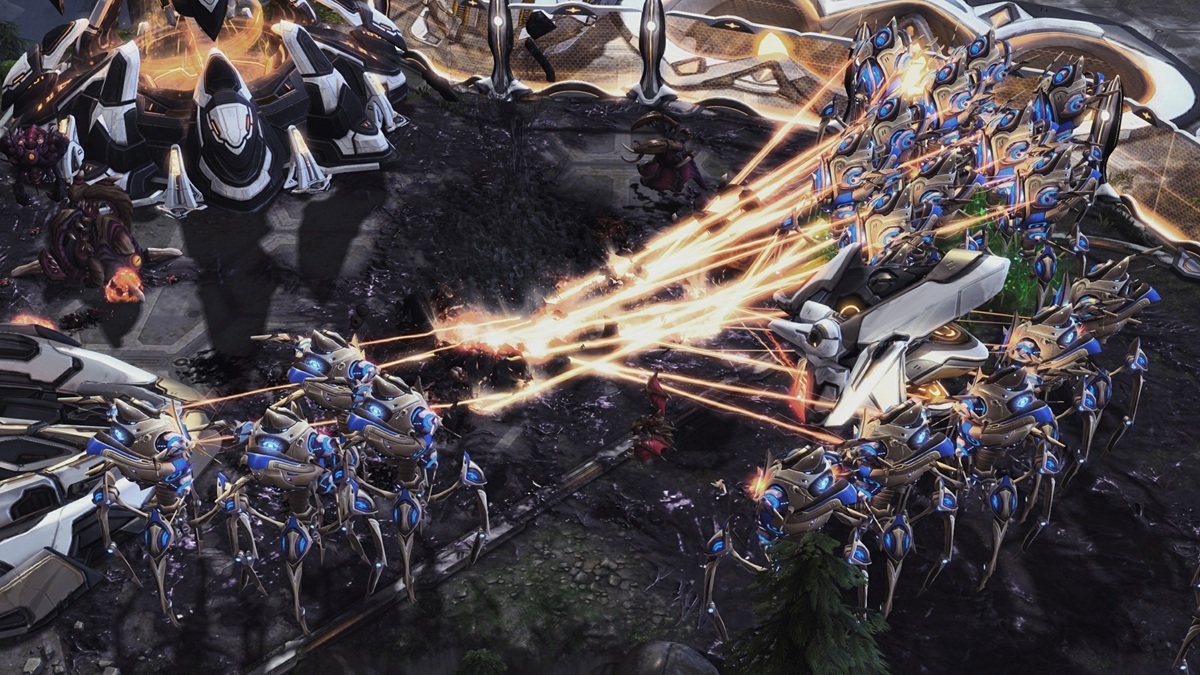
Brad Wardell: The first game made for spectacular battle scenes, but there were a number of areas we really wanted to flesh out for the sequel. For example, in the first game, it was just the Substrate vs. PHC. If those don’t sound relatable, it’s because they weren’t. It was all machine vs. machine. This was a hardware limitation at the time, since the idea of animating tens of thousands of human soldiers was the stuff of movies then. But now, in 2025, things have changed. Which means we now have the United Earth Forces with human soldiers in all their squishy organic ways battling it out against the machines on a scale that’s never been done before.
Another improvement from the first one is the new region system in the game. In the first game, players ran into some of the same drawbacks that other games like Total Annihilation and Supreme Commander have run into, where players only need to capture enough resources to jumpstart their self-scaling economy, and games tend to end with either a nuke race or massive bombing raids. For example, you could simply turtle in and build refineries, making the most viable strategy being mass bombers and orbital bombardment, which takes some of the strategic depth out. Now, in the sequel, we took a page from Sins of a Solar Empire, where regions have a certain number of build slots, which forces the player to care a lot more about conquering the map. You can still turtle in and create hard points, but you won’t be able to hunker down into a tiny corner and drag out the game for hours.
Next to the inclusion of humans, the most obvious change will be the terrain. Now that every single shot is a physical object, we can make terrain matter a lot more, and you see that in the map. While we will support pre-made maps, in Ashes of the Singularity II, maps are procedurally generated, which means exploration and scouting really matter, and controlling “good terrain” is critical.
And these are just some of the things players will notice in screenshots. We also have a tech tree now, all new units, Steam Deck support, cooperative multiplayer, and much more.
Sir Nuno: What advancements in technology and engine design have you made for Ashes of the Singularity II, and what new possibilities have they opened up for the scale and detail of the battles?
Brad Wardell: One of the reasons we waited so long to do the sequel is that we really want to innovate the gameplay of real-time strategy games. If I see a game that is just StarCraft or Supreme Commander: Forged Alliance with better visuals, I’ll just stick with the original. As a player, I need to see the genre progress in interesting, non-gimmicky ways.
For Ashes of the Singularity II, there are two big innovations that only became viable in the last few years due to hardware advances:
First, the terrain itself is a character. The terrain can be damaged, and battles leave debris. Now, Total Annihilation, all the way back in 1997, pioneered this stuff, but our goal here is to really make it feel like the continents players are battling over feel like real places and not gamey.
Second, and this will be invisible if it works correctly, are the AI agents that act as your sub-commanders in your armies. Their job is to order units to position and move to the right places rather than just be a blob. The rules of combat are pretty straightforward, but to do it well always requires what amounts to a CPU core largely dedicated to making units intelligent, keeping in some semblance of a formation, while also remaining an effective fighting force. Being able to release a game that says, “Yeah, we require 8 CPU cores to play” without it harming sales is a pretty big deal.
Now, there are a lot of subtle, evolutionary improvements too. When zooming out, it’s pretty obvious this isn’t a typical strategy game. It’ll look like you have some drone flying at 10,000 feet in the air, looking over a huge battlefield with HUDs rather than a “game map”. There are so many powerful visual techniques that are basically “free” on the GPU now to make things feel more real than what was possible 10 years ago.
Sir Nuno: Ashes of the Singularity had a mixed response to its campaign. What lessons did you learn from the first game’s single-player experience, and what can players expect from the new story-driven campaign in Ashes of the Singularity II?
Brad Wardell: The main lesson: players need relatable protagonists. The original featured AI and Post-Humans – not very emotionally engaging.
What’s a little…horrifying is that you realize, when playing the campaign in the sequel, that the protagonists of the Ashes of the Singularity campaign were kind of the villains, and if you go back and replay it, we weren’t hiding that they were villains.
Oftentimes, characters only seem like “the good guys” because they’re the protagonists. I think people are going to really want to revisit the campaign from the first game; it was all there from the start.
But that’s not the craziest part of the story. Let’s go back to 2016. The main characters were analogs to Eric Schmidt, Elon Musk, and a sentient AI called Haalee. Back then, few people knew anything about where AI was likely to go. The entire premise of the game seemed almost obscure. But let’s look at the situation: The AI companies needed power and computing substrate to do the AI work. This was called Turinium. They bought millions of acres of land in Australia, the Sahara, Siberia, etc., to convert into Turinium. Now, as people are reading S&W, this scenario doesn’t seem so obscure. And our story kicks off with one or more of these guys beginning to convert the moon into this stuff.
Let me put it another way, very specifically: Would it come as a total shock if, say, Elon Musk started covering the surface of the moon with computing and power generation modules to power Haalee Grok? And if he did, without the permission of the United States, the EU, China, or Russia, what do you think the response would be? Because that’s basically the plot line of Ashes of the Singularity II, which was set up in the first game, from 2016.
Sir Nuno: What other new units, structures, or abilities are you most excited for players to get their hands on in Ashes of the Singularity II? And why?
Brad Wardell: Being able to actually command armies of soldiers (not squads, not divisions, armies) is something to behold. Especially since units don’t just disappear when they die.
In terms of actual gameplay, having the terrain be interesting and meaningful is probably the most fun change so far. I also really love having to explore maps. We still need to come up with a good reason why you can’t just “See” via satellites the entire map in real time, because it is really cool having each game be able to have a unique map.
Sir Nuno: With games like Supreme Commander and Total Annihilation often cited as inspirations for the original, what other games or media have inspired your design decisions for this new installment?
Brad Wardell: While I probably have more hours in StarCraft 2 than any other RTS, I would say the game owes more inspiration to games like Kohan, Company of Heroes, and Northgard. Obviously, Total Annihilation would be the game’s great-grandfather in terms of lineage, but I think those games deserve a special call-out for the innovation they’ve brought to the genre over the years.
Sir Nuno: RTS games can often be difficult for new players to get into. What steps have you taken to make Ashes of the Singularity II more accessible to newcomers while still providing the strategic depth that veteran players expect?
Brad Wardell: RTS games have been notoriously click-speed-centric in the past. I would say our number 1 focus is making the game reward strategy instead of APM (Actions per minute). Strategically, Ashes of the Singularity is a more complex game than the first one. I don’t like it when games “dumb” themselves down trying to chase an audience, but I do like it when games take advantage of user experience innovations and more powerful hardware to make the games more accessible.
For example, the AI agents (sub commanders) will let players focus on a handful of armies that largely take care of themselves. You can still micro, but victory is going to go to the strategic expert and not the tactician. Logistics, strategic maneuver, technology choices, etc., are going to be critical, and none of those things require high APM.
Sir Nuno: What do you feel is the one feature or design choice that makes Ashes of the Singularity II not just a sequel, but a truly better and more compelling game than its predecessor?
Brad Wardell: Now, I am probably an outlier on this, as the game’s pretty graphics mean little to me, so I would say if I had to pick one thing that is going to make me want to play the game over and over again, it’s gotta be the procedurally generated region maps with improvement slots. It means that each game will be different, and I need to think about which regions I need to take, what I should build in them, and which ones I need to keep my opponents from taking or help defend with my allies.
Sir Nuno: Please feel free to add anything else you think might be worth knowing about Ashes of Singularity II.
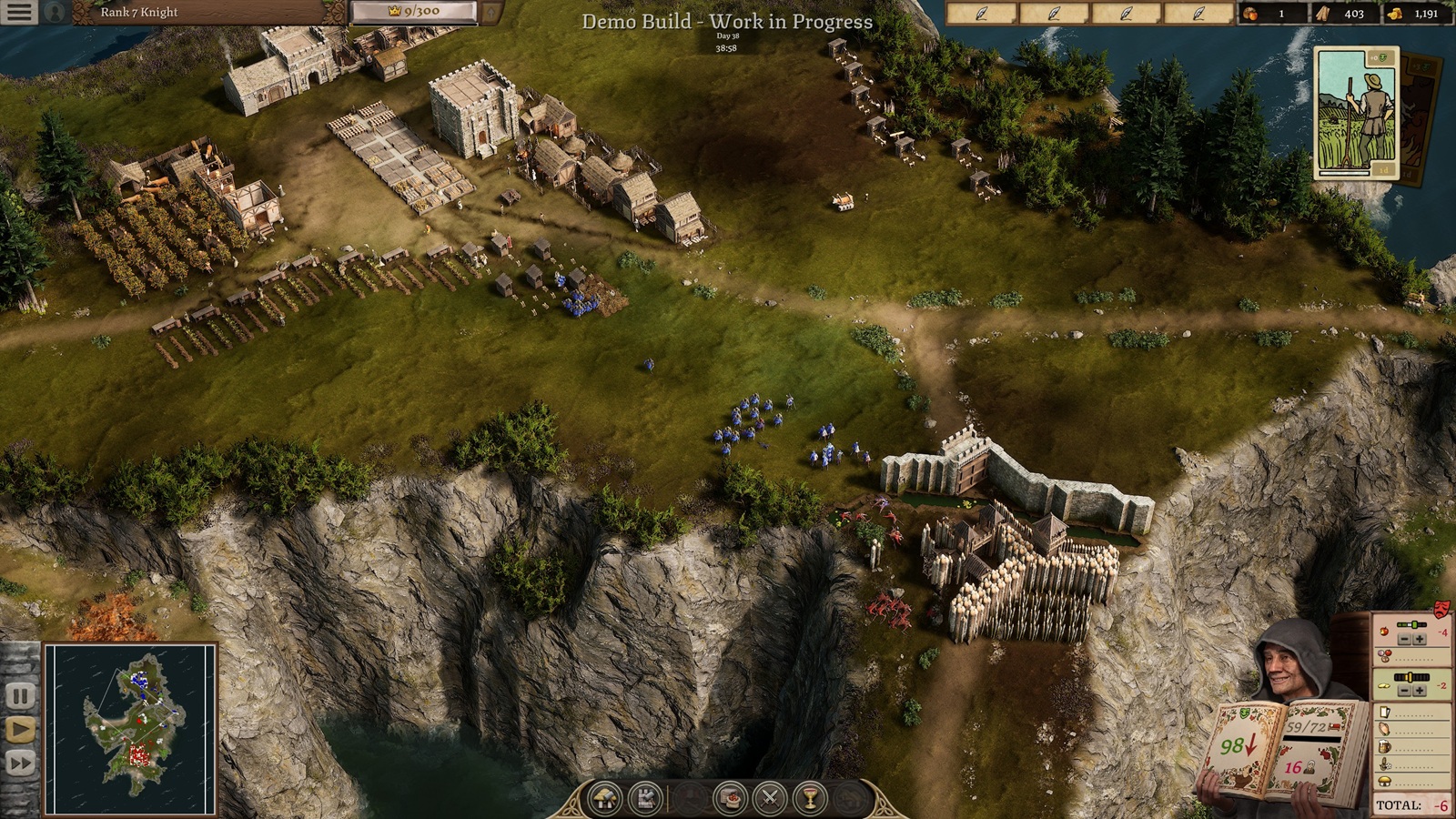
Brad Wardell: I would say that those reading S&W are people like me who are perfectly content to load up and play Crusader Kings or Total War: Shogun 2 or Age of Empires 2. To get me to play something new, it needs to bring something new to the table. Take Manor Lords. What made it so popular? It’s because it brought something new to the genre. I can’t go back to 2010 and find a “Manor Lords” type game. I bring this point up because that’s how we see Ashes of the Singularity II. We can’t just go take the first game, add a third faction, make it prettier, and call it a day.
When looking at Ashes of the Singularity II, what I hope players will be able to see, even in a screenshot, is that this game is different. Just like I could look at a screenshot of say Manor Lords and instantly see that it was doing something different with the City-building strategy genre, we want players to look at Ashes of the Singularity II and go “Oh, I get it, these are battles happening seamlessly across continents. Not just a ‘big map’.”
Another thing I think people will like a lot will be its modularity. The game uses Luau as its main scripting language. I suspect it’ll become a question of “what can’t be modded” about this game.
Sir Nuno: Thank you so much for coming!
Support Strategy and Wargaming
I do what I do in Strategy and Wargaming because I love to do this, and I’m never going to stop. If you would like to support me with that, you can buy me a coffee for a dollar if you’re feeling generous. If you can’t, no worries, Strategy and Wargaming will always be free, and I’d love to have you around!



Leave a Reply