
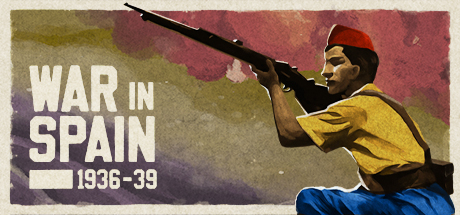
The Spanish Civil War was one of the most complex and important conflicts of the 20th century, and it has often proven difficult to translate into a satisfying operational wargame. War in Spain 1936-1939 is one of my most anticipated wargames for 2026, and I was able to get an interview with the team to explore what makes this one so special. The game uses a familiar hex-based, turn-driven structure while radically rethinking logistics, land combat, and AI. In this interview, the development team walks us through who they are, why this conflict mattered to them, and how War in Spain became the first release of a much larger engine-driven vision.
Who is the team, and why have you decided to go with the Spanish Civil War?
Our team ranges between 25 and 35 people across all continents except Antarctica (and New Zealand, if it is considered the eighth). The original core was from the WITP: AE (War in the Pacific: Admiral’s Edition) game published back in 2009. I am the project leader for War in Spain, as I was for AE.
We are currently working on several games with different sub-teams. WIS was on my bucket list because it starts without defined front lines—just a jumble that needs to be sorted. It is an operational and logistical nightmare, which makes it fascinating. We adapted the map from a larger project, so it was relatively easy to rework it for WIS compared to starting from scratch. The Game Design team (responsible for land, sea, and air unit research) and the art and sound teams moved quickly, outpacing the others. That is why WIS is being released first, though this wasn’t originally intended.
What made you decide on this scale, and how does it benefit depth over breadth?
I prefer a 5nm/hex (nautical miles) scale because it provides a much more “tactical” feel compared to WITP or AE, which used 60nm and 40nm hexes. Those feel almost like “area” games by comparison. Regarding “depth over breadth,” the smaller scale allows for a more granular simulation of unit interaction and terrain.
You mentioned that the game engine is inspired by WitP; why is that? And why did you choose that one?
Our team started as a group of modders for WITP (2004). We coalesced into a single team around 2005–06 called “CHS” (Combined Historical Scenario) and built new maps and data for the original game. We then approached Matrix to ask if we could use the code to create an “expansion pack,” and with the agreement of David Heath, Erik Rutins, and Joel Billings, WITP-AE (2009) was born. The CHS team essentially became the AE team.

Independently, a developer named Alessandro S. became enamored with AE and built a completely new game engine with a similar look and feel. We linked up in 2018 and formed a new team consisting of AE veterans and modders. At our core, we are all AE players. That system is unique in its attempt to represent land, sea, and air in a historical, hex-based, turn-based format that we all enjoy.
What work have you done to accurately represent the dynamics of the Spanish Civil War with the engine?
As mentioned, AE attempts to represent air, sea, and land equally—we call it “triphibious.” However, players have long felt the land element was the weakest component. For this new engine (we have 52 titles on our wish list; WIS is just the first), we wanted to significantly improve land combat and movement.
The 5nm scale and detailed representation of units—from Division and Brigade down to Regiment, Battalion, and even some Companies—is a major departure from the system’s Uncommon Valor (2002) origins. You can now break down divisions into historical sub-units. In prior versions, these breakdowns were generic “A, B, C” components and only one level deep.

Logistics are also entirely different. In AE, we used “magic carpets” to move supplies; if two locations were connected by a road or rail, supplies moved automatically. This ignored actual transport capacity, which was a problem in regions like China or Northern Australia. We added “band-aids” to fix this in AE, but the fundamental flaw remained. In our new engine, all movement is based on explicit logistical capacity. The rail net, trucks, and wagon units are all represented with historical capacities. No more magic carpets! The AI executes the movement, but it is constrained by these literal capacities.
Regarding the AI, we moved away from the script-based system of previous games. The new engine features a “true” AI that evaluates the situation every turn and makes unit-by-unit decisions to win. It is much tougher and more unpredictable than a script.

Finally, all units in WIS have historical names and capabilities, from untrained militia to the pre-existing Spanish Army. We have also included multiple factions to reflect the disorganized reality of both warring sides. Politically, we represent German and Italian interventions within their historical constraints. For the Republicans, protecting supply ships from Russia is a “game within the game” that is strategically crucial.
How is ground and air combat going to work?
At a high level, both will feel familiar to AE players. You give orders, the turn executes, and you see the results alongside air battle animations. The “devil is in the details”—with richer unit representation and new combat algorithms, the results are much more historically grounded. After a turn, you can click “crossed swords” icons on the map to read detailed combat reports while planning your next move.

What steps have you taken to make War in Spain approachable for newcomers while still satisfying veteran grognards? Or are you going “full War in the East”?
We’re definitely not going WITE2! We started with AE as our inspiration and only deviated where our own designs required it. This is a historical, hex-based wargame, not a first-person shooter, but we’ve tried to make it accessible.

We provide three different interfaces for land units and two for air units, allowing players to choose their favorite style. There are more ways to view information than in AE. In testing, we found people have vastly different playstyles—some prefer the bottom bar, others the sidebar, or unit lists. By offering these various paths for order entry and reorganization, we hope players of all experience levels find a workflow that suits them.
How significant is foreign intervention mechanically, and can player choices meaningfully alter the scale or timing of external involvement?
Foreign intervention is primarily logistical for the Republicans, while the Nationalists receive actual Italian and German ships, planes, and ground units. The timing and capabilities are historical. In WIS, the player cannot alter these timings; while the engine supports broader political mechanics, the Game Designer for WIS chose to keep these elements historically fixed.
How are supply lines, popular support, and civilian factors represented?
Logistics is the heart of WIS. A player must think in terms of the full supply network, from “sources to sinks” (production to consumption). You must align your offensives with your logistics and deploy support units—like mobile rail concentrations and truck companies—accordingly. Failing to plan your network will result in your forces being overrun by an enemy who did their homework.
How far can players push alternate outcomes, and where did you decide to keep history firmly on the rails?
Players have total freedom in strategy. You decide whether to concentrate on Madrid, exploit naval power along the coasts, or defend the Basque homeland. There are no “rails” preventing you from changing your strategic objectives.
Can we expect post-release updates, expansions, or modding tools?
Yes. There will be more scenarios, updated manuals, and ongoing bug fixes. The game already includes a full-featured editor, so players can mod to their heart’s content. As for other conflicts, this engine was built for a broad range of geography and eras. We have 51 other titles on our wish list, some of which have been under development for a while. We’re hopeful that we can bring these to light for wargamers to enjoy!
Thank you so much.
I hope you guys enjoyed this interview. Have you been playing Spain at War 1936-1939? What did you think of it? Do let me know in the comments down below!
Support Strategy and Wargaming
I would love for Strategy and Wargaming to go ad-free, and if you would like to support me with that, you can subscribe to my Patreon for a 3 dollars a month, or buy me a coffee for a dollar, or more, if you’re feeling generous. If you can’t, no worries, Strategy and Wargaming will always be free, and I’ll love to have you around!

Leave a Reply