
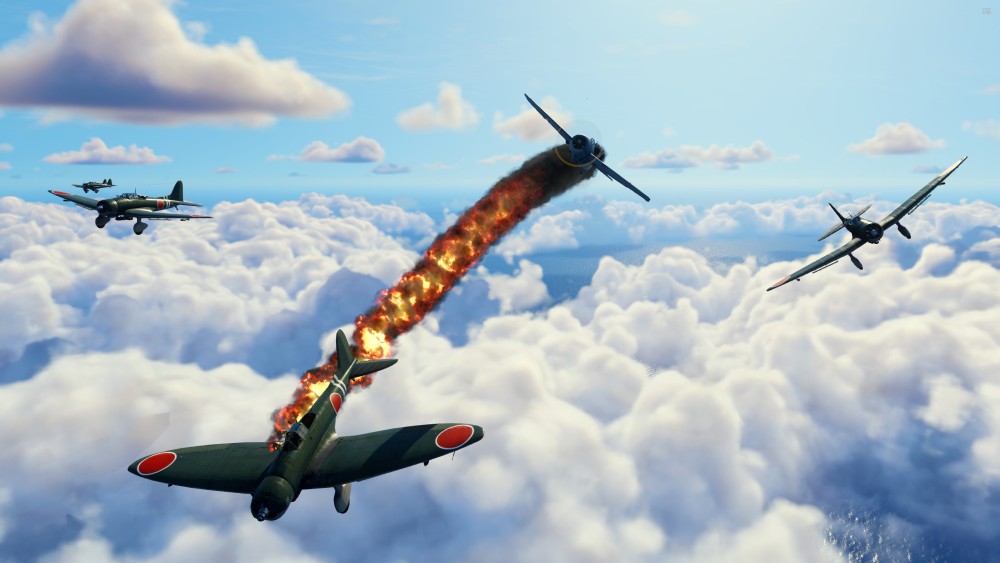
Task Force Admiral is just a couple of weeks away from seeing a full release, after being in the oven for over a decade, if you take into account the fact that Amiral Crapaud, the man behind this titanic effort, started to ponder its creation in 2015, and went on to sell one of his apartments to turn this dream into a reality. I have done a massive interview with Amiral, in 2024, where we discussed the game at lenght, and I would highly advise you to read it all, if you want to get a thourght look at what the thought process behind its creation and mechanics are (part 1 was already linked above, you can check part 2 here, and part 3 using this link).
The first time I got my hands on the game, I announced that “I always knew that Task Force Admiral was going to be something special”. What I didn’t know at the time was how impressive this first showcase was going to be, and it did more than enough for me to call it a “next-generation wargame”, based solely on the quality of its mechanics, graphics, and 1:1 recreation of naval combat in World War 2.
What is Task Force Admiral?
Task Force Admiral is a real-time wargame set in the Pacific in 1942, where players lead a carrier task force in 1:1 scale battles, leading the American Forces against the Imperial Japanese Navy in premade scenarios or a battle generator. The game’s biggest selling point, in my opinion, is its 1:1 recreation of the battles, down to the individual plane, ship, and second of each passing minute, with its realism and incredible 3D graphics.
With this level of detail and complexity, one would be justified in assuming the game is a challenge to manage. After all, managing a carrier in World War 2 was enough work for 3000 men. How do you translate that into a video game format? And add to that managing the entire Task Force accompanying the carrier, and for sure, this game is only for those of you willing to decipher the convoluted UIs of Graviteam Tactics and Close Combat, or those grogs who read 300-page manuals for fun. Well, you might think that, but you would be wrong. Very wrong, in fact.
Easy Controls = Easy to Play
The idea that the small team working on Task Force Admiral might have tinkered a bit too much with the user interface was one of the first things that flared to my mind when I pressed the install button. All I could think was “please, leave it alone”. And alone they did. The game controls the same. The player has several windows showing different information, but orders are issued in the most simplistic way possible: select a mission type, a target (if you have one), assign the number of aircraft for said mission, a time, and greenlight the mission. Reconnaissance patrols are set by controlling a cone on the map, and defensive patrols are set by drawing the perimeter you wish the planes to circle in. Simple as. Everything else, the game takes care.
Now, this isn’t to say that you can just put things in autopilot and enjoy the pretty graphics. There’s a lot to do and keep you busy, starting with the basics: you need to find the enemy (and evade it), search for enemy patrols, and destroy them before they relay information back. Set up maneuvering courses, maybe break up your fleet into two for added maneuverability, constantly adapt your strategy to what the enemy is doing, defend your carrier from enemy strikes, etc.
Unprecedented Decision Making In Naval Warfare
Their game is jam-packed with non-stop action, stress, and decision-making. TFA does an awesome job at showing the player the number of critical decisions made by commanders during World War 2. Do you send a strike force to a possible enemy location, or wait for a full confirmation? What if the enemy managed to get out of there before your planes arrive? Do you strike meticulously, risking your dive bombers and bombers being too few to cause any real damage, but safeguard your ships? Or do you send in a full force and risk yourself being overwhelmed by the enemy if they find you first?
Other decisions are more tactical in nature, like managing the timelines of each carrier, because moving planes around takes time; there are several air wings in the air at any given time, waiting to touch down and refuel, and you’re either launching more aircraft into the air or allowing them to land. Even the management of the ships is of crucial importance. Do you split your forces and have a portion of your ships going after the enemy? Do you use them to screen for enemy formations? Or do you keep them close to protect the carrier? All of these decisions are going on in your head at once, and the fact that none of them are forced upon you. By this I mean that the game doesn’t literally force you to make those decisions, you have to come up with them and execute them, which should be a testament to how well designed the game.
As for the demo contents, there are two missions available on the final moments of the Battle of the Coral Sea (the first carrier-on-carrier battle between fleets that never saw each other), giving you control of the aircraft carriers Yorktown and Lexington, and these two assignments (the second one is an alternative-history variant of the first) should keep you entertained for several days, really. Each mission can be replayed several times and still go a lot of different ways, so that’s really nice from the developers’ part. Add to that a basic mission generator, and there’s quite a lot in here to give you a sense of whether you’re going to enjoy the game or not. Also, each mission briefing is voice-acted in the most 1940s way possible, and I love that. It’s really nice that they did that.
Final Thoughts
After playing this second round of the demo, I still maintain my opinion that Task Force Admiral is going to be a very important benchmark in wargaming going forward, by bringing a mix of realism, ease of use and control, scale, and production values one sees very rarely in this space.
However, with the game nearing its release date, I’ll publish my final review after I play the whole thing, because there are some things I’m interested to see if the game is going to do, such as missions involving land operations as well. I see some screenshots about Midway, so I want to take a look at that too. Before my final appraisal, I also wish to experiment with how the AI behaves over the course of many games, something that I wasn’t able to access thus far. Another thing I would love the game to have would be modding support. While it’s easy to imagine a golden road ahead for Task Force Admiral, the game is still going to have an Early Access stay, and we’ll have to see how that one goes.
Now, if you don’t mind, I’m going back to play the Task Force Admiral demo.
Support Strategy and Wargaming
I do what I do in Strategy and Wargaming because I love to do this, and I’m never going to stop. If you would like to support me with that, you can buy me a coffee for a dollar if you’re feeling generous. If you can’t, no worries, Strategy and Wargaming will always be free, and I’d love to have you around!

Leave a Reply