

I’ve been in contact with WDS for a few years, and I was finally able to get an interview with one of the boss men on their team. I was given David’s info to interview for my Proud and the Few review, but I decided to do a full-on WDS interview for this separate article. I could have interviewed Rich, I imagine, but he seemed too shy and reserved at the time. Looking at his picture on their website, I imagined he must have been tending to some cattle and not to be busied with such interviews, while David, in contrast, was filled with energy and enthusiasm.
David Freer has many years of experience managing different companies with diverse cultures in the Asia-Pacific region and Australia. He has keen insight into global management. He also worked on developing games for John Tiller before setting up WDS with Richard Hamilton to continue John’s legacy.
With such great credentials, I was a bit nervous doing the interview. Was my knowledge of history and warfare up to the task? After the first few minutes, I was at ease because David was an expert at coordinating such professional engagements. He brought out his wine, and I had my coffee. We were ready for that casual, professional interview.
He opened the conversation by letting me know he had seen my Facebook posts and read my article on this website. He was very positive and enthusiastic about the interview. He assured me there are plenty of games and time periods in the pipeline that are amazing.
David: Most of the issues of new games coming in is there’s too much great stuff in the pipeline. It’s about my and Richard’s time. There is always something to do. There are always subject-matter experts that come in. We vet who knows their stuff and who is giving us a runaround.
Since I was interviewing him for my review on The Proud and the Few the conversation went that way.
Chris: How are you affiliated with The Proud and the Few?
David: Let’s be careful—I’m not the developer for it. Proud and the Few is one of the Squad Battles games that hasn’t been modernized. I am responsible for all the 20th-century and modern-warfare games, and I’m trying to get it up to the standards of the other Squad Battles titles. It’s my responsibility to get all these games up to standard. It’s an easy one to do because it only has a few nations.

Chris: Are you still in touch with the previous developers?
David: Nope, they’ve all gone on to do other things. Some of these games came out 15 years ago. Some of the designers come back and do a few games, and some went on to do other things. John Tiller had been trying to do commercial work for the Air Force and Army stuff too, so his time had been tight during these times. People come to John and inquire about issues—like, ‘Can we enhance the tanks in the game?’ A lot of what we’ve been doing so far is upgrading and updating the artwork in the current games, and also squashing bugs. We also have the issue that some of our best guys, like Wild Bill, passed away.
Chris: Yeah, that dude is legendary. I think I’ve seen his name show up in old DOS games.
David: What I’m trying to do is get younger guys like yourself—or people in their 20s and 30s, or even teens to get start playing John Tiller games.
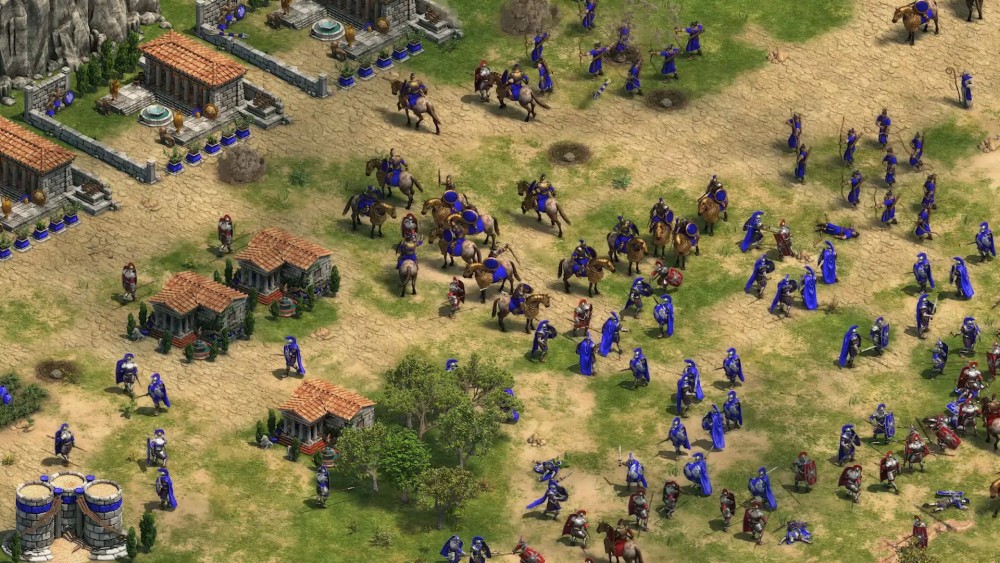
Chris: That brings me to my other question. Why spend all this time prettying up all the graphics? Most gamers who play WDS want 2D more, and I seem to be the only minority who wants colorful units instead of just NATO counters.
David: You may be the minority, but you’re the minority of current players. Think of this now—I’ve got 115 titles. If I sold 100 units of each, in a year, that’s a half-million-dollar business. If I can move that up to a thousand, you’re talking about serious money. Now our issue becomes: what do we have to do to move the volume up?
Right now, we’re surviving. Like you said, a lot of older guys who played hex-and-counter games all had NATO counters, and that’s what they grew up with. When we launched Crusades, we did more graphics on the counters, and we did better on sales than all the NATO-counter games. We’re big believers that if we get 2D and 3D up to a more modern level of graphics…
Chris: Yeah, for me Panzer Corps 1 is perfect for getting graphics on the cheap.
David: It’s funny you say that, because we’ve got one of the guys from Second Front working with us. The guy working on the vehicles.
Chris: You know, a lot of guys don’t like the art design on it, but I find it charming.
David: We don’t position ourselves like Panzer Corps—we position ourselves where we do some serious stuff on the historical approach and the research. If we’re doing a graphics refresh, he’s got to make art where you can tell the difference between a Panzer IV E and a Panzer IV G. The image and the graphics have to be close—you can’t have a generic tank. The tanks on Second Front are perfect. He’s not the guy doing the basic figures, but the actual tank detail.
Chris: For me, I wasn’t a big fan of the dice roll in Second Front. I prefer more XCOM-like probability when it comes to statistical outcomes of chance.
David continued about the graphics: For Squad Battles, you’ll see a little of that with Proud and the Few—with new graphics, it’s a bit more immersive for soldiers, tanks, and vehicles, especially when we update it with the Burden of Command scenery.
I decided to poke around with some personal questions related to Proud and the Few. I followed up with this:
Chris: Let me ask you a personal question about being Australian. What does the American Marines fighting in the South Pacific mean to you? I imagine that y’all must have felt the UK abandoned you to focus on Europe when it was besieged by Germany, so it must have made the Americans look like heroes—and maybe that reflects how y’all see history today.

David: Look, Australia was very much part of the British Empire. We were quick to declare war on Germany. But because we had the tyranny of distance, and with the loss of the navy in Singapore, we felt very exposed. Anyone who is educated can see the relationship with the US has been successful. We’re as big as the US in landmass, but we only have 26 million people. It’s not very populated. We have large deserts but also some of the largest mineral deposits in the world, and a lot of solar-energy areas.
Ninety-six percent of the people live in a few big cities. Only 4% live outside the cities. It gave us a feeling of vulnerability. When Japan invaded, it made us feel very vulnerable.
It was good for us that the Americans did turn up. It was a big strategic benefit for Americans too. That sea lane from the US to Australia protected the Australians. There is awareness of this, but youth today don’t seem to be aware.
Chris: I was thinking post-war too. It’s like when I talk to my friends in Vietnam, people there don’t care about the war anymore.
David: Yeah, kids these days don’t particularly care for history. My son does.
Chris: Yeah, where I live kids just like anime, so it’s hard to get them into wargames in general.
David: You keep mentioning the Pacific, but let me tell you that my specialization is on the Eastern Front. My understanding of warfare on the Eastern Front is that it has a lot to do with logistics, nine times out of ten.
Chris: I told Nuno I find the Eastern Front the most fascinating. In high school we were brought up with Saving Private Ryan and nothing but the Western Front, especially with Cold War propaganda. When I look at WW2, I see it like a bromance between Hitler and Stalin gone wrong, and we were all just side characters.
David: Yeah, going into that era of WW2, it was a bromance of necessity. Not a bromance they honestly thought was going to work out.
Moving my questions back to the Pacific Theater, I asked:
Chris: Are there gameplay elements that reflect the Smith-versus-Smith—Army versus Marines—doctrines in the Pacific? Or would that only show up on an operational scale?
David: Yes, we would look at that like how we deal with different nations. It’s actually interesting. You know how do we distinguish between different nations? We have some very blunt tools. We’ve got morale rating, equipment, and training. And in Squad Battles, it’s at an individual-man level. I can turn around and say this squad had this kind of equipment, and an engineer squad has this type. So we can make many differentiation factors based on those.
Doctrine is at an operational level, so in your question we would have to look at national differences, at things like human-wave attacks and banzai attacks. There’s a broad brush on these national differences. It’s an area I’m very interested in. For example, how can we get more differentiation between these nations? In Crusades, one person has a crossbow versus two-handed swords versus whatever. How do I get those different doctrinal approaches into a game?
We talk about it a bit. Sometimes it’s attack and defense differences, morale, or special code, but we are still looking at what we can do in the future with this. Unit quality represents morale. What if we do quality and morale in the future? Like in Russia in WW2 early on, quality was very low but morale was super high because of the discipline. How do we represent that? Someone with poor training and poor equipment but who can hang around longer. We are having these conversations. They weren’t in the game previously. But I think we can do more than what we’re doing right now.
I wanted this interview to be a bit personal, so I decided to bring my own personal experience in the army, and David had a lot empathy when answering.
Chris: How do you use the system to reflect geography? I was a soldier in Baghdad, and I played your Modern War game recently. I went back to Baghdad to revisit some of the old battle sites a few years ago, so when I go back and play your game, the problem I have is that the layout is so generic—it’s hard to reflect a city with so many historical sites.

David: I get it. I know what you’re talking about. You’re talking about Squad Battles with a 40-meter scale. You can do a lot, and not do a lot at the same time. In Panzer Battles and up, we are very particular on overlay maps and what we use. For example, in Advance to the Reich, other than the Stalingrad map and Kharkov map, every map is generic. We’re trying not to do any generic maps from now on, but the older maps were like that. One limiting factor—like when you’re playing Modern War—where is Saddam’s palace at? Where is the mosque?
This is where Burden of Command graphical update comes in. It allows us to fix these issues. Our mapping software is super generic. We don’t have ten slots for specific locations to enter on a map in one area right now. We’re trying to fix that, so I can be like, ‘I’m fighting in Berlin,’ but we’re not right there yet.
We’ve got so many opportunities and so much work to do to get some of these new features in. But we want to do it. It will appeal to so many people: ‘Ah, I captured this in Baghdad.’ It’s part of the storytelling. It’s like an RPG game, you know? I capture that, I feel it, I can see it, I identify it.
Chris: I can see why Rich is making me interview you.
David: Why is that?
Chris: Because you’re passionate about the same things I am.
David: You’re talking about storytelling, and video games as a medium should be experienced though interactive storytelling, and there’s always a better way to do that. I got involved with this in 2009. I turned up with a whole game to Tiller. I told him “I looked up your Kharkov ’42 game; I did a Kharkov ’43 game based on your game with 25 scenarios and asked him if he was interested. To me, this is a passion. But every time I look at these games, all I see are tons of things we could do better. I’m constantly asking myself what will get more player engagement, what will get people interested in it? You’ve got to look at why you enjoy playing games. I can delve into this perspective when I have the advantage of developing and designing my own games.

Chris: I read in history that some battles take place overnight. You ever think of doing an over-50-turn Squad Battle?
David: We have scope creep everywhere. One of the first Panzer Campaigns that came out was Battle of the Bulge—it had about 20,000 hexes. I did Moscow ’42 and that was a 300,000-hex game. Battle of the Bulge was one scenario in my game. We had this creep in terms of size that’s been going on.
Can we have much larger size in Squad Battles? Maybe, but we’d have to re-engineer some of the software. John never intended this in the code—like day and night cycles. These are the bits and pieces we are trying to bring from other titles. There is code for everything. We’ve taken one piece from one game and put it in another. We’ve got 12 games series, so there’s plenty to take from. We’re trying our best to have less code. Sword and Siege is a perfect example, because it comes from Musket and Pike.
But the main issue here is: How do we simplify our coding? We’d love to do 50-turn games. But it’s up to the game designers. We showed on Falklands the other day how we’re making day-and-night cycles. There’s a lot of stuff coming. It gives our developers enough stuff to deal with.
With my determined skepticism and my desire for huge Squad Battles scenarios, I decided to ask the following question.
Chris: Because I know Mike Amos, a.k.a. Warhorse, and that’s his philosophy. He loves to make 50-turn battles or more.
David: Ya, Mike is fascinating and a lovely guy. Wish he was able to be a developer for us. He does some amazing stuff.
Chris: Let’s go back to the Pacific War, because gosh darn it, I did a lot of reading for this interview. According to Sledge’s book With the Old Breed, he states mortar fire is accurate. Maybe I just suck at understanding the Squad Battles system. (which was very accurate assessment on my part, Randy Plume demoralized my troops in Korea War Squad Battles with mortar fire recently) Can you tell me how to be more effective?

David: You need to take a lot of things into consideration before shooting! Look at the sighting. Make sure you’re able to see what you’re shooting at. We changed artillery around dramatically two patches ago. It comes with a binocular indicator, and it shows the target you’re shooting at. Everyone says exactly what you said: ‘I shot 25 hexes away from what I aimed at and the artillery never hit anything.’ Seeing what you’re shooting at is a critical factor of the equation, right? If you cannot see what you’re shooting at… well, that’s it. And mortars are short-range, so it’s even more important to have line of sight. If you’re shooting from the valley at someone over the crest, you’re not going to hit much.
Chris: Ok, so it is my gameplay. Randy will have this one!
David: So when you look into Proud and the Few, look at the stages that happen with artillery. It’ll put binoculars on the guy who is spotting. It’s not for mortars because it only affects what that unit can see. If it puts a zero, it’s landing where you asked. If it’s a two, it’ll hit two hexes away.

Chris: I’m always learning new things with WDS games, and there’s so much in the system I don’t understand yet. That’s great!
David: We’re doing a lot of work on the artillery system because players have too much flexibility, more than they would normally have in a real situation. We have to restrict it so they think like an artillery commander.
Chris: So, I finished reading Chesty Puller’s book, and he mentions that one reason the Japanese failed is the lack of creative thinking. They were disciplined and knew how to take orders but failed to adapt, which is essential to modern tactical battles. Kenneth Pollack in Armies of Sand mentions this too with Arab military failures. So in your game, is there a way for this to be conveyed when you make up stats for different armies?
David: This goes back to the Japanese being very hierarchical. I’ve dealt with Japanese businesses, and they’re still very hierarchical. And you bring up an interesting concept with Arab armies, because they didn’t have a national identity as they’d been colonized so long by Turks and other nationalities. They didn’t have a concept of national identity; it was very tribal. So it begs the question: was warfare important to them? Israelis had to use technology to compensate for inferior numbers, so a proper modern military was prioritized.
We try our best to make all these situations historical, which is hard because it’s historical only until someone moves a counter. So we try to get the right setup: who was there, how many, what kind of units? What’s reflected in the parameter values? That’s where you can get national nuances—replacement values, how resilient they are, if someone moves quicker, or someone gets a bonus when attacking. That’s how we build those differences.
Chris: What’s the challenge in getting the AI right? It seems like pure scripting. I imagine AI costs went down as games evolved. Is there any attempt to make smart AI, or is it always going to be pure scripting?
David: This is a misconception. Scripts are like strategic AI. The scripted AI orders tell them to go to Normandy or Omaha. Then there is what I call it the general AI. It does things like: ‘You ask me to move there, so in what order do I move? You put me here, now I have to set up a frontline. I have to put zones between hexes’. You can’t script for that. A general AI has to ask a lot of questions: ‘If I’ve got five units, you put one in every second hex, or one forward, one back because there’s an HQ here. If there’s a gap, do I pull back? If you’ve got certain strength points, do I retreat?’. This has nothing to do with scripting. Scripting is just the conductor’s score. It’s not playing the individual trumpet, trombone, or violin—that’s general AI. Can we improve it? Absolutely. We’ve got a lot of ideas.

We’ve done a lot of improvements on Panzer Campaigns in the last 12 months. We try not to make it smarter, but less dumb. Why put an HQ on the frontline? How do I stop that? That’s general AI, not scripting.
Chris: I asked this on a WDS FB group: What happens when you play a 150-turn mission? Does the AI stop working? Can I still have fun? Because it’s not recommended on the scenario briefing.
David: Yeah, it’ll work. We’re trying to move toward event-based AI. It allows us to go from one objective to the next. We’re also moving toward something called Command AI—we want the AI to be able to run say, a division so you don’t have to play the whole army. You can tweak what the AI does, by adjusting its AI orders. So the AI can take on a division or other formations, for you.
Chris: If someone asked whether the AI has improved since 10 years ago, what should I tell them?
David: The answer is yes, but our work isn’t over, and we have other things in the works. In Panzer Campaigns, we tore apart the AI and stopped it from doing dumb things like putting artillery on the frontline, or making an HQ charge a hill. We aren’t trying to make Napoleons out of the AI, but create logic why the game does what it does. That’s what general AI does without scripting. You’ve got 500 men and I’ve got 100? The general AI says it’s going to defend, not attack. But if there’s an objective behind you, it says ‘I’m going to attack.’ That’s the basic level.
With evenly matched forces, the AI doesn’t know what to do, that’s where scripting helps. It focuses the AI on the missing step: after capturing an objective, what next? In a 150-turn scenario, it’s like an orchestra—one instrument plays one part, another plays something else. How do we get around that? With objective-based AI systems. We can load in the critical things to do, and if you lose one objective, you can tell the AI to go back and retake it
Since our time was coming to an end, I wanted to ask a few more questions about common criticism of the WDS games.
Chris: Do you ever think about making the gameplay experience a lot smoother, with less clicking, like the Panzer Corps series? It’s a common criticism.
David: Absolutely. Our main issue is UI. One solution could be possibly hovering over a unit to show many of the options available, for example. We’re still studying it, and with 115 games, we have a lot to deal with when it comes to standardization. That’s why we’re trying to stick to a couple of game engines.
Chris: As a niche developer, I think it’s ballsy not to be on Steam or other popular platforms. You ever debate the cost-benefit of at least putting a few on Steam, like Combat Mission did? If it wasn’t for Facebook groups I would never have heard of you guys.

David: The reason we didn’t is we didn’t feel the UI and graphics at the time were up to it, and you get judged hard on Steam. We’re probably close to putting stuff up, but it’s not a massive priority. We’re not convinced we’ll see a material benefit. It would make updates easier, sure, but we have to give 30% to Steam, and our pricing is an issue. We cater mostly to board gamers who see the value in these games compared to the price of a traditional board game (usually over $100). Fortunately for us even the esoteric stuff sells well. It surprises me when something like Northern War sells well.

Chris: Have you considered political consequences in modern wargames such as removing victory points for civilian casualties?
David: Great questions, and we have talked before about logistics, like feeding and guarding prisoners of war. When Germans invaded Russia, they didn’t expect millions of prisoners. Do we reflect that? Is it fundamental to the game? When we make bigger games, I personally want logistics at the forefront, but not a lot of players find that fun.
Chris: I’d be excited for that if I know how to play it. That’s the issue. Having a proper demo tutorial is essential. I don’t know how to play tons of titles in my backlog because of bad tutorials.
Mostly looking at you, War in the Pacific, and my collection of AGEOD games.
David: Tutorials are hard. We do tutorial scenarios, but the community helps a lot, and we’re thankful for that. We often tell developers to make tutorials easy, but some resist. If people lose the tutorials, they get frustrated. They need to learn how to interact with the basics of the game first, before trying to instantly jump into a battle. This is where project management comes in. We need to tell developers to keep the turns simple.
Chris: Have you ever thought of a game where you mix strategic and tactical? Like two games together?
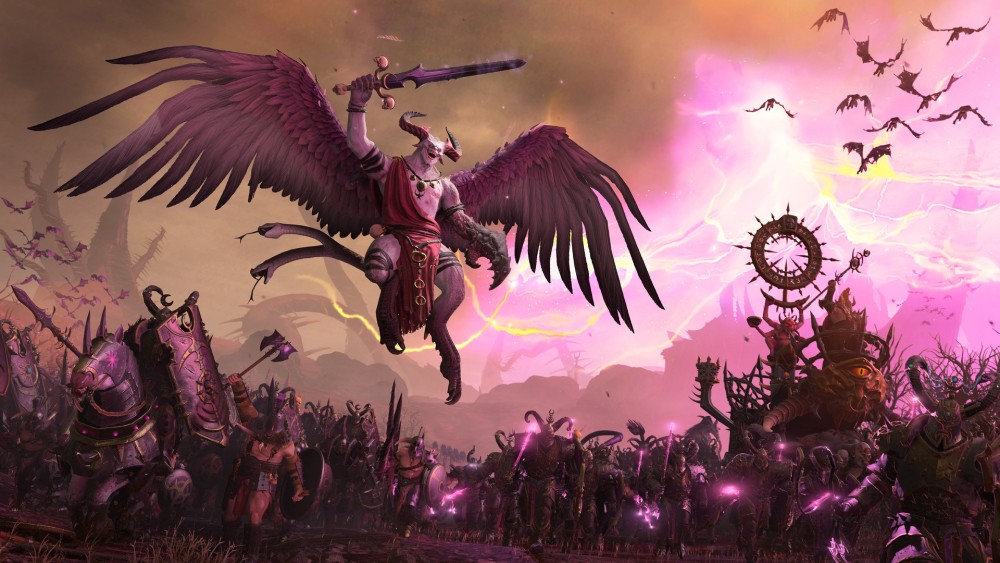
David: We’d love to, but we have so much in the pipeline. What’s the focus? What scale? Invading Russia at army level? Individual-man level? With mixed genres like Total War, those guys can do it because they have money. For us small guys, it’s harder. And how do we do it—what aspects do we focus on? It’s a challenge, but we would love to.
After answering this last question, we wished each other goodnight. I’m calling from Thailand and he’s calling from Australia. Time zones are different, but we both felt that similar night fatigue. We said each other goodnight.
The future seems bright for WDS. David answered all my questions to my satisfaction and conveyed the design decisions I hope for in the future: A better AI, a nice graphical uplift to more modern standards, while keeping the 2D NATO counters the old-timers like Paul Sinatra. I hope you guys enjoyed this interview, and I would love to know what are your favorite Wargame Design Studio titles and why.
Support Strategy and Wargaming
I do what I do in Strategy and Wargaming because I love to do this, and I’m never going to stop. If you would like to support me with that, you can buy me a coffee for a dollar if you’re feeling generous. If you can’t, no worries, Strategy and Wargaming will always be free, and I’d love to have you around!


Leave a Reply